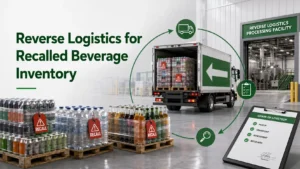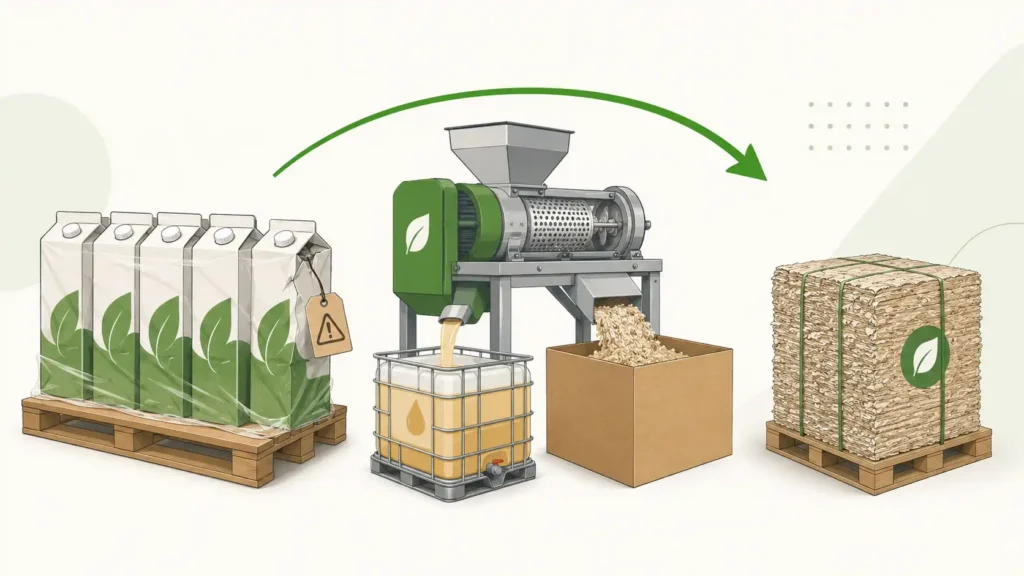
A milk carton and a cereal box look like they belong in the same recycling bin, but they are not built the same way, and they are not recycled the same way either. Most beverage cartons are technically recyclable, though whether yours actually gets recycled depends on where you live and what kind of carton it is.
This guide covers what beverage carton packaging is actually made of, how the recycling process works once a carton leaves your hands. We’ll also look at what happens to cartons that never make it to a bin, and how the out of code beverage products disposal process works when that inventory shows up by the pallet.
What Are Beverage Cartons Made Of?
Before getting into recyclability, it helps to know what is actually inside a carton wall. Most cartons on the market fall into one of two categories:
- Aseptic cartons: Shelf-stable cartons that hold juice boxes, soup, broth, wine, and shelf-stable milk without refrigeration.
- Gable-top cartons: Peaked-roof cartons (also known as milk cartons) you usually find in the refrigerated dairy case, used for milk and cream.
So what are beverage cartons made of, exactly? Both carton types start with paperboard, which gives the package its structure and makes up the bulk of the material.
According to Tetra Pak’s own sustainability data, an average carton runs roughly 70 percent paperboard, 25 percent polyethylene, and a thin aluminum layer that typically accounts for less than 5 percent of the material. That aluminum layer is what allows an aseptic carton to sit on a shelf for months without spoiling: it blocks light and oxygen from reaching the product inside. Gable-top cartons, since they are refrigerated rather than shelf-stable, generally skip the aluminum layer and rely on paperboard with a polyethylene coating instead.
This layered construction is common across most food and beverage cartons, not just Tetra Pak’s own packaging. It is also exactly why cartons cannot go through the same recycling stream as a flat piece of cardboard: a paper mill cannot pulp paperboard, plastic, and aluminum together as if they were one material.
Are Tetra Packs Recyclable?
Technically, yes. Practically, it depends on your municipality. Not every Materials Recovery Facility (MRF) is equipped with the optical and robotic sorting technology needed to identify and separate cartons from the rest of the recycling stream. Where that equipment exists, cartons get pulled out and sent on to processing. Where it does not, they are more likely to be screened out and landfilled, even when the household did everything right at the curb.
So can you recycle Tetra Pak cartons specifically, or is that access limited to store brand milk cartons? The answer is the same regardless of brand. Recyclability comes down to the material composition described above, not the logo on the package, so a Tetra Pak juice box and a supermarket gable-top milk carton face the same access question in your local system.
This is also the segment of the market where beverage brands in the food and beverage manufacturing industry most often field consumer questions about whether their packaging claims hold up, since a “recyclable” label on a carton is only as good as the infrastructure in the customer’s zip code.
How Are Beverage Cartons Recycled?
Once a carton makes it into a system equipped to handle it, the process runs in a fairly consistent sequence from curb to finished material.
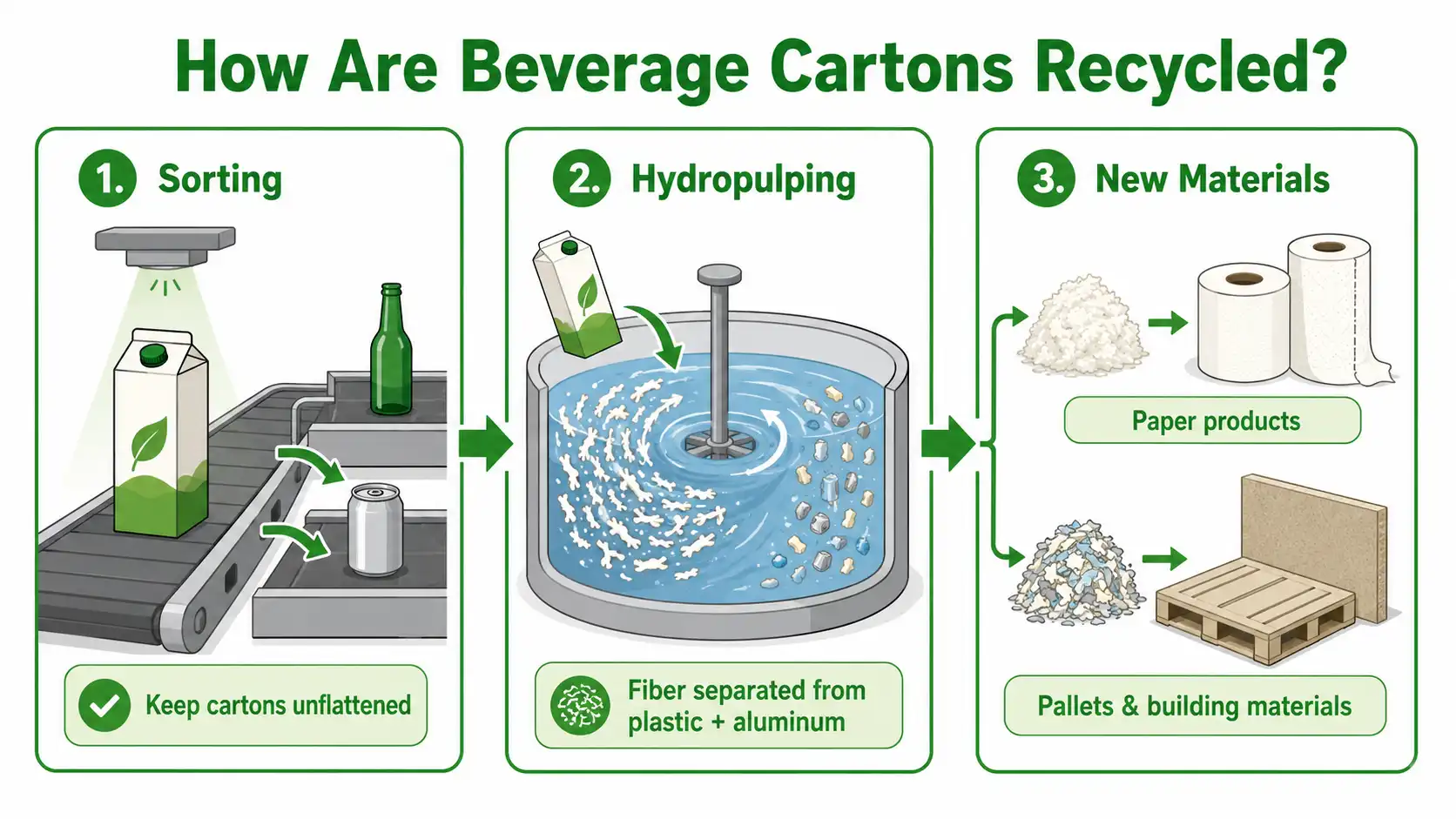
Step 1: Sorting at the Materials Recovery Facility
At the MRF, cartons are separated from glass, metal, and other plastics using optical scanners and robotic arms trained to recognize carton shapes.
Practical tip: Do not flatten your cartons before tossing them in the bin. A flattened carton is harder for the sorting equipment to identify correctly, and a misidentified carton is more likely to end up in the wrong stream.
Step 2: Hydropulping and Material Separation
Sorted cartons move to a paper mill, where they are dropped into a hydropulper: a large tank that mixes the cartons with water and agitates them, much like a giant kitchen blender. The water breaks down the paperboard fibers and releases them from the plastic and aluminum layers they were bonded to. This is the core mechanism behind aseptic carton recycling, and it is also how milk cartons are recycled, just without an aluminum layer to separate out.
Step 3: Two End Markets
Once separated, the recovered paper fiber and the plastic-aluminum layer go in different directions:
- The paper fiber is repulped into new paper products: tissue, paper towels, and other tissue-grade goods.
- The leftover plastic-aluminum material, sometimes called polyAl, has a few possible destinations. Some facilities burn it for energy recovery, others convert it into pallets or furniture
A smaller number of processors skip hydropulping entirely for certain carton streams, instead shredding and pressing whole cartons into building materials like roof coverboards.
Are Wax-Coated Milk Cartons Recyclable?
If you remember milk cartons that felt slightly waxy to the touch, you are thinking of an older packaging style. Wax-coated cartons used a paraffin wax layer instead of the polyethylene lining found in modern cartons, and they have largely disappeared from the US beverage industry.
Are wax milk cartons recyclable through the process described above? Generally, no. Wax does not separate cleanly from paperboard fiber the way polyethylene does during hydropulping, which makes wax-coated cartons a poor fit for standard carton recycling streams. The good news is that this is mostly a legacy concern. Nearly every carton on shelves today, aseptic or gable-top, uses a polyethylene lining rather than wax, which is what makes modern beverage cartons recyclable in facilities equipped to process them.
What Happens to Unsaleable Beverage Cartons?
Everything above assumes a straightforward scenario: someone bought a beverage, finished it, and recycled the empty carton. But a meaningful amount of cartoned beverage product never gets that far. It gets recalled, it expires on a warehouse shelf, it arrives damaged, or it simply never sells. That inventory needs a different path than a household recycling bin and a detailed beverage recall documentation.
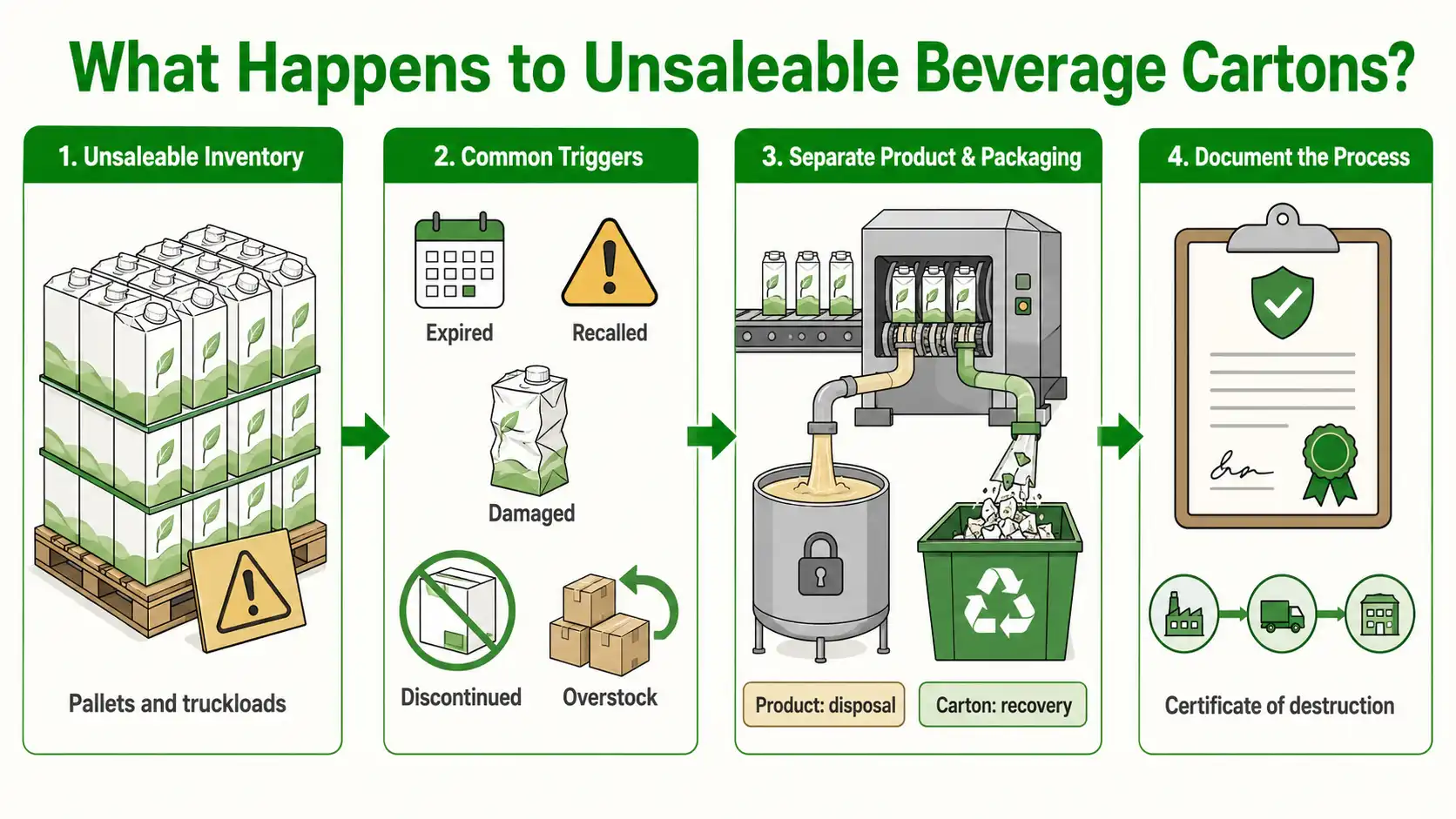
1. When a Carton Never Reaches a Curbside Bin
Recalled, expired, or damaged cartoned inventory is not a single-carton problem. It shows up by the pallet or the truckload, and it cannot simply be tossed in a dumpster or trickled into curbside bins a case at a time. It requires coordinated pickup, a documented destruction or recycling pathway, and chain-of-custody reporting from the moment it is flagged to the moment it is fully processed. This is the kind of situation that beverage destruction and recycling programs exist to handle, and it looks nothing like a residential recycling program.
2. Which Situations Send Cartoned Product Down This Path?
A few common triggers account for most of this inventory:
- Expired shelf life: product that passed its best-by date before it sold through
- Recalled product: cartons pulled due to a safety issue, mislabeling, or contamination concern
- Damaged packaging or pallets: cartons compromised during shipping, storage, or handling
- Discontinued or reformulated SKUs: packaging made obsolete by a formula or branding change
- Excess overstock or returns: cartoned product that simply did not move through the supply chain
3. Does the Carton Itself Get Recycled or Destroyed?
The carton and the product inside it usually follow different paths once a decision is made.
The liquid or food product almost always needs proper destruction or disposal, since it cannot legally re-enter the supply chain. The empty carton material, once separated from what was inside it, can frequently still be recovered the same way an empty household carton would be.
That separation step is essentially the same principle behind beverage depackaging, which handles product and packaging separation at a commercial scale rather than one carton at a time.
4. Documentation for Recalled or Destroyed Product
Recalled or destroyed cartoned product needs the same kind of documentation as any other regulated destruction process: a record of what was destroyed, when, how, and by whom. Brands and retail partners typically request this in the form of a certificate of destruction, which closes the loop for audit and compliance purposes.
Beyond Cartons: Coordinating Recovery Across Packaging Types
Unsaleable beverage inventory rarely shows up in one packaging format at a time. A single recall or a discontinued product line can span cartons, PET bottles, cans, and pouches within the same shipment, since most brands package multiple SKUs across different formats.
Treating each material as its own isolated problem slows everything down. What actually works is coordinated multi-layer packaging recovery that accounts for cartons alongside packaging recovery for the bottling industry, rather than routing each material through a separate vendor and a separate process.
Cartons and PET bottles are different materials with different recovery paths, but managing them under one coordinated plan, backed by transportation and logistics that can handle mixed pallets, is what keeps a multi-format recall or overstock situation from turning into several disconnected projects.
How BeverageDestruction.com Supports Brands With Unsaleable Cartoned Product
BeverageDestruction.com coordinates pickup, sorting pathway, and documentation for recalled, expired, damaged, or otherwise unsaleable cartoned beverage inventory, working across a network of more than 200 processor facilities. Having managed the equivalent of over 1 billion beverage containers, our role is to connect brands, retailers, distributors, and co-packers with the right processor and reporting pathway for their specific product, whatever format it happens to be packaged in.
If your business is sitting on cartoned inventory that cannot be sold, contact us to talk through the volume, condition, and documentation needs of your situation.
FAQ
1. What are milk cartons made of?
Milk cartons, known as gable-top cartons, are made mostly of paperboard with a polyethylene lining and no aluminum layer, since refrigeration replaces the need for the extended shelf stability an aluminum barrier provides.
2. How are beverage cartons recycled?
Cartons are sorted at an MRF using optical and robotic equipment, then sent to a paper mill where a hydropulper separates the paperboard fiber from the plastic and aluminum layers. The fiber becomes new paper products, while the leftover material is repurposed into pallets, furniture, or building materials.
3. What happens to beverage cartons that can’t be recycled?
Cartons that a local MRF cannot process, along with older wax-coated cartons, typically end up in a landfill rather than a recycling stream. This is largely a matter of local infrastructure and carton type rather than the material being inherently unrecyclable.
4. What happens when a brand has unsaleable cartoned beverage inventory?
Recalled, expired, or damaged cartoned product is handled through coordinated pickup and a documented destruction or recycling pathway rather than curbside recycling. The product typically requires destruction, while the packaging can often still be recovered separately, with a certificate of destruction closing out the record.