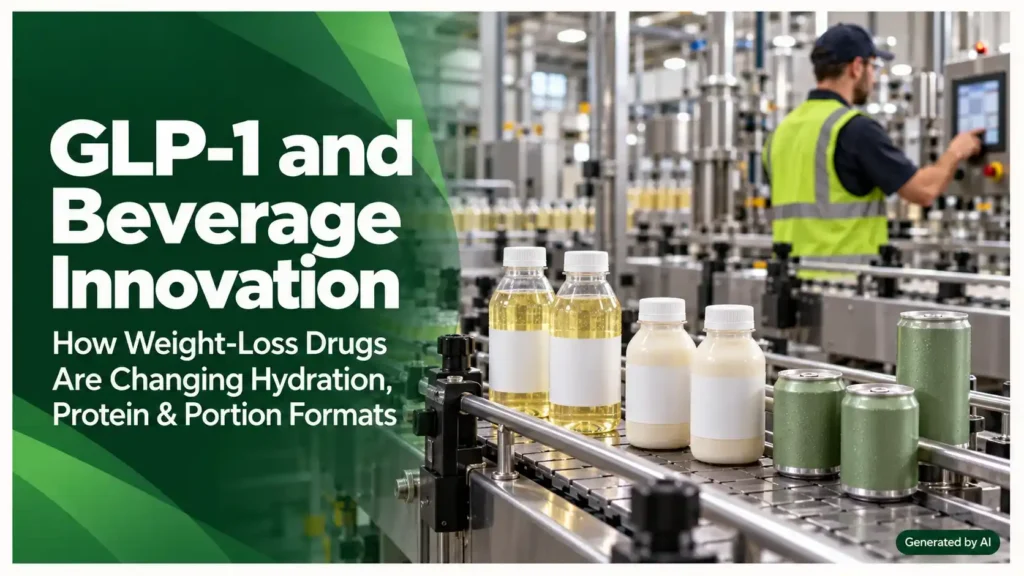
GLP-1 beverages are drinks built around the needs of people taking medications such as semaglutide and tirzepatide. In practice, that tends to mean smaller servings with more protein, plus extra attention to hydration and sugar.
The problem? Because users may eat and drink less, each serving needs to deliver more nutritional value without making claims that go beyond the evidence.
The scale is hard to ignore. The KFF Health Tracking Poll found that 12% of U.S. adults were currently taking a GLP-1 drug (1,350 adults, October 27 to November 2, 2025). Separately, the Cornell study of GLP-1 household spending found that grocery spending fell 5.3% on average within six months of a household member starting one.
Neither figure measures demand for any single drink, so we treat both as context in this look at GLP-1 beverage trends and beverage innovation.
What Are GLP-1 Beverages?
GLP-1 beverages are a positioning more than a product category, and no legal definition sits behind the term. They are ordinary drinks, such as protein shakes or electrolyte drinks, made or marketed with these users in mind. However, they do not contain GLP-1, and no beverage works like the medication or replaces it.
So why do they exist at all? A joint nutrition advisory from four obesity and nutrition societies (Obesity, May 30, 2025) explains that appetite often drops and stomach side effects are common early on, with nausea in 25% to 44% of trial participants. That is why clinicians focus on protein and fluids, along with small, frequent meals, and those needs line up with the three drink formats we cover here.
The regulatory picture keeps moving too. On December 22, 2025, FDA approved Wegovy tablets (oral semaglutide) for weight management in eligible adults. That is a confirmed milestone, but it tells us nothing about where adoption or beverage demand goes next.
GLP-1 Beverage Trends and What the Purchase Data Shows
Before we get to specific drinks, it helps to know what each study actually measures. They track different things, so we will flag which is which as we go.
How GLP-1 Households Shop Differently
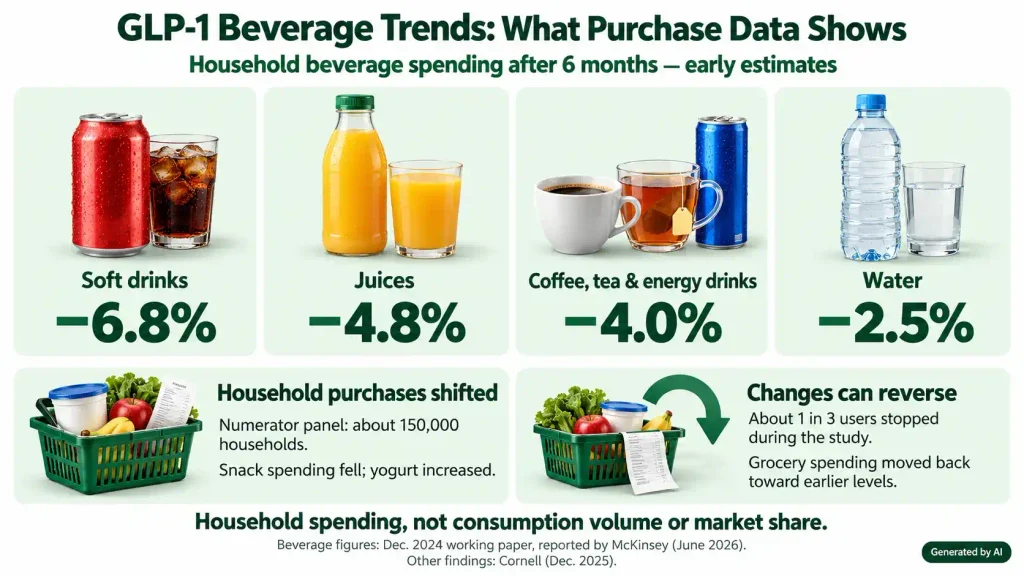
Cornell researchers used Numerator panel data covering about 150,000 households, and the picture shifted quickly. Households with a GLP-1 user grew from about 11% in late 2023 to more than 16% by the middle of 2024. Within six months of starting, savory snack spending fell about 10%, while yogurt and fresh fruit went up. Keep in mind that this tracks spending rather than volume, and it covers whole households.
How GLP-1 Adoption Changes Household Beverage Spending
For beverages specifically, we turn to a McKinsey chart of the Cornell beverage data (June 11, 2026). The study found that six months after adoption, spending on soft drinks fell 6.8% and juices fell 4.8%. Coffee, tea, and energy drinks dropped 4.0%, and water slipped 2.5%.
Note: The percentages above come from the earlier December 2024 working paper analysis, and the final published study doesn’t report them in its abstract, so they’re best read as early estimates. They also describe household spending rather than how much people drank or how any brand’s market share moved.
Alcohol is a separate story. Just Drinks (January 2025) reported a drop of about 1.4%, but the estimate was not statistically conclusive.
Demand That Can Reverse
Here is the part that is easy to miss. About a third of users in the Cornell study stopped the medication, and their spending went back to earlier levels. So the demand is real, but it may not last for every household.
Hydration Drinks and Electrolyte Beverages
Hydration is where the formulation work is most concrete. The goal is a drink that’s easy to get down, with no claim that it treats anything.
Why Hydration Becomes a Bigger Need
Hydration matters more for these users because dehydration from nausea, vomiting or diarrhea can lead to acute kidney injury, according to the joint advisory. The FDA prescribing information for Wegovy says much the same, noting that most acute kidney injury reports came from patients with those symptoms.
Eating less also means less of the water that food normally supplies, and the drugs may dampen thirst as well. Put those together and fluid intake can end up lower than people expect. How much to drink is a question for a clinician, so we leave targets out.
How Brands Are Adjusting Electrolyte Beverages
There are a few formulation directions for hydration drinks.
- Low calories come first, usually with sodium and potassium.
- Lower carbonation may suit nauseous users.
- Light fruity flavors tend to beat creamy ones.
- Smaller packs support drinking little and often.
Each of those choices has a cost. Cutting sugar shifts the work to sweeteners and flavor masking, since mineral salts can taste sharp on their own. That’s why electrolyte beverages are harder to make gentle than they sound. Non-carbonated drinks may also need different preservation than carbonated ones, which makes shelf life testing especially important.
Protein Beverages and the Challenge of More Protein in Less Volume
Protein brings some of the toughest formulation and labeling questions. Here’s how they play out.
Why Protein Moves to the Front
For protein beverages, the clinical starting point is the joint advisory again. Clinicians proposed 1.2 to 1.6 grams per kilogram of body weight per day during active weight reduction, or an absolute 80 to 120 grams per day. The advisory adds that shakes and fortified products can help, and that protein drinks may feel easier to manage when appetite is low.
Those ranges describe what clinicians proposed for patients undergoing active weight loss, but individual protein requirements vary and should be determined by a healthcare professional.
What Density Does to Taste and Texture
Packing more protein into a smaller serving is harder than it sounds. Drinks get thicker and chalkier, and off notes can creep in. Packaging Digest (2026) cites Oikos Fusion, which fits protein and fiber into a 7 oz bottle. Fiber can help, though it raises tolerance questions for users who already have stomach symptoms.
What a Protein Claim Requires on a U.S. Label
Now for the label. The Daily Value for protein is 50 grams for adults and children aged 4 and older. Under 21 CFR 101.54, a “high in protein” claim generally needs at least 20% of that value per reference amount customarily consumed (RACC), while “good source” needs 10% to 19%. Protein quality matters too, because the calculation applies a PDCAAS correction (AURI). And the FDA protein claim rules judge each claim per RACC, not per pack.
So a 10 gram bottle does not automatically earn “high in protein.” You should check the RACC, the serving size rules and the corrected protein content before putting that claim on a pack.
Smaller Portion Beverages and Pack Formats
Smaller packs suit anyone who wants less at a time, and that’s a much bigger group than GLP-1 users. The sales numbers show real growth, but they can’t tell us why.
What the Sales Data Shows
NielsenIQ data for the 52 weeks ending May 2, 2026 shows 7.5 oz soft drinks growing 7.0% while 2 liter bottles fell 3.8%. Among low- and zero-calorie soft drinks, mini cans grew 19.4% while 2-liter bottles slipped 1.8%. That is all shopper data. The shift lines up with what GLP-1 users report needing, but it does not prove GLP-1 drugs caused it. Still, it makes smaller-portion beverages worth watching.
What Going Smaller Costs
Going smaller has a catch, though. Smaller formats usually carry a higher price per ounce, which can protect margin as volume falls. But smaller packs also raise the ratio of packaging to product and need line changes, and shoppers may read them as shrinkflation if they get less for the same price.
So the real question is how you explain the change. We would lead with a reason, such as a serving people can finish, rather than launching smaller pack sizes at the old price.
What to Check Before You Use a “GLP-1 Friendly” Label
Some products already wear the badge. Packaging Digest (July 8, 2026) reports that Nestlé launched Boost Advanced with a “GLP-1 Friendly” label in June 2025, but the FDA hasn’t defined the phrase. University of Arkansas extension specialists (March 11, 2026) describe it as a marketing label rather than a regulated claim.
FDA does step in when a product claims drug-like effects. In a December 10, 2024 warning letter, it called Veronvy drops, which were marketed to suppress appetite, unapproved new drugs. Abroad, lawyers quoted by BeverageDaily (April 7, 2026) say the EU treats the phrase as a disease or health claim without approval, while the UK question is untested.
In practice, describe what the drink contains, such as protein grams and serving size, rather than hinting at a link to the medication.
Note: This is not legal advice, so any GLP-1 wording should go through regulatory review before you make any official claims.
What GLP-1 Trends Mean for Beverage Production and Portfolio Planning
Beverage innovation looks simple on a slide, but it lands on the production floor first. For food and beverage manufacturers, a new format usually means line changeovers and new packaging components, plus its own shelf life and taste testing for each version. Changing pack sizes brings new UPCs and label changes too.
Demand planning deserves the same care. Cornell found spending shifts across several categories, NielsenIQ shows smaller formats growing among all shoppers (which we can’t pin on GLP-1 use), and about a third of Cornell’s users stopped the medication. That’s a good argument for cautious forecasts, smaller first runs, and regular check-ins on how each format sells.
Portfolios shift with demand, so a plan for discontinued beverage SKUs helps when you retire a format. A launch that misses its forecast can become a failed beverage launch with stock on hand. And if you reformulate to cut sugar or add protein, the old formula stock needs a plan too, which we cover in our guide to beverage reformulation waste.
GLP-1 Beverage Formats at a Glance
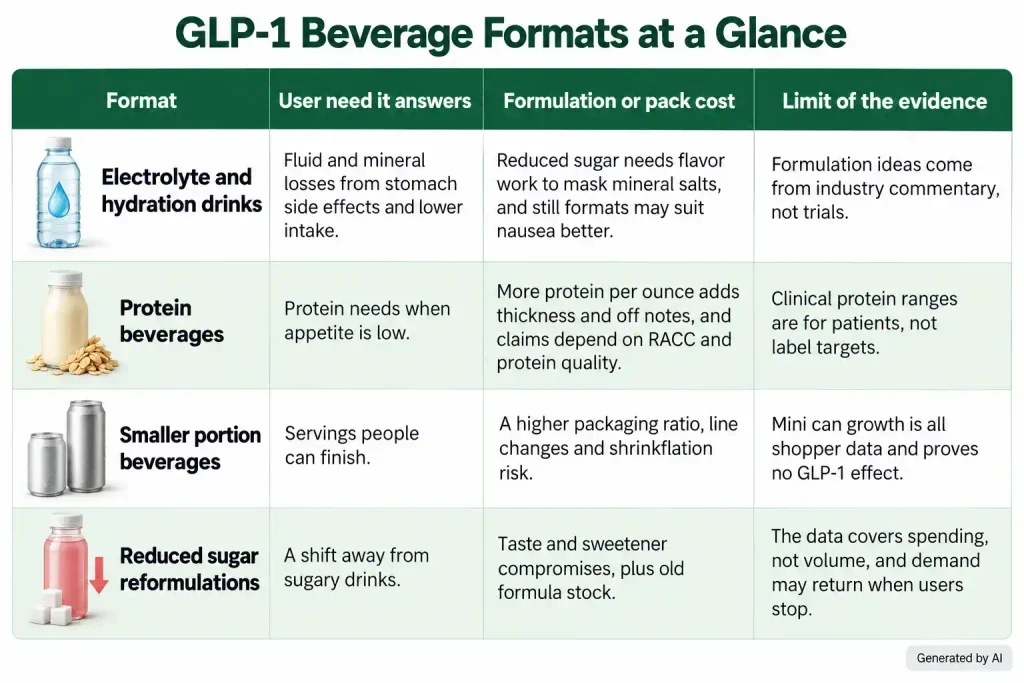
Bringing It Together
GLP-1 beverages can make a smaller can or a higher protein formula look like a quick decision, but each one leaves stock, labels, and line time that somebody has to deal with. Good beverage innovation plans for that part too, and we work with beverage brands and retailers on exactly that.
If you’re weighing a change, contact us and we’ll talk it through.
Frequently Asked Questions
What are GLP-1 beverages?
GLP-1 beverages are ordinary drinks formulated or marketed for people taking GLP-1 medications. They usually offer smaller servings, more protein per serving, hydration support, or reduced sugar. The term is a positioning with no legal definition behind it.
Do GLP-1 beverages contain GLP-1 or work like the medication?
No. They do not contain GLP-1, and no drink works like the medication or replaces it. Hinting at a drug-like effect may create regulatory problems.
Why are electrolyte drinks linked to GLP-1 use?
Users may drink less and can lose fluid through nausea, vomiting, or diarrhea, and industry commentary suggests the drugs may dampen thirst. The formulation ideas come from trade sources rather than clinical trials.
What does “high in protein” mean on a beverage label?
Generally, the drink needs at least 20% of the 50-gram Daily Value per RACC, after protein quality correction. A “good source” claim needs 10% to 19%. Check the RACC and serving size first.
Are smaller beverage pack sizes growing because of GLP-1 drugs?
Sales point that way, but the data covers all shoppers. NielsenIQ shows mini cans and 7.5 oz formats growing, which lines up with what GLP-1 users report needing. It does not prove GLP-1 drugs caused the shift.