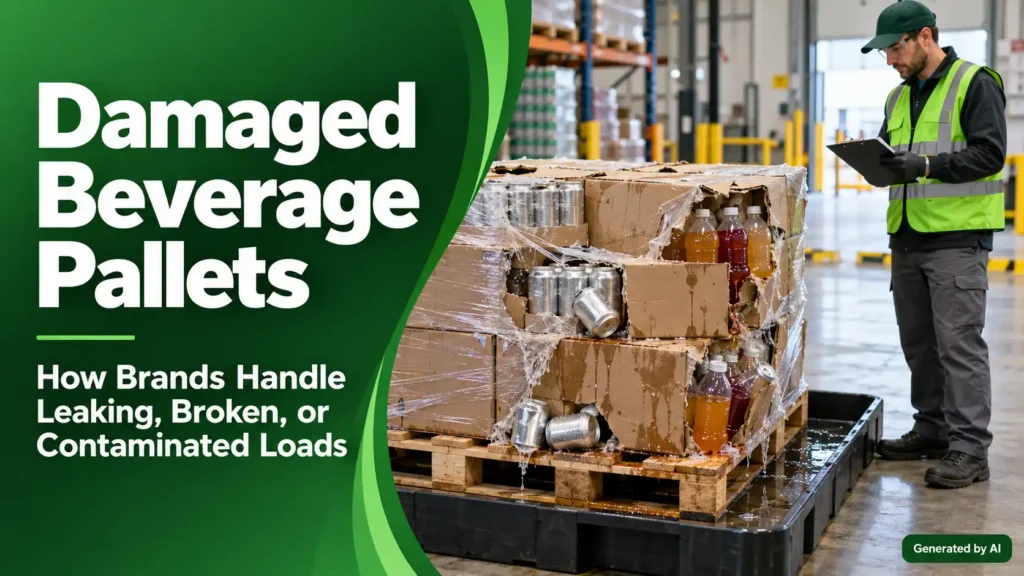
You walk up to a pallet that’s leaning and soaked, and everyone looks at you for the call. Can any of it still ship? Is the load leaking or broken, or did it pick up contamination? Nobody handed you a playbook for damaged beverage pallets, and a wrong move can cost you good product or an awkward conversation with a customer.
Below, we cover what counts as damage at the pallet level, how to assess the damaged load, and how the place it happened changes your next step. We also point you to what comes after, for product you can’t sell.
Damaged Beverage Pallets: What Actually Counts as Damage?
In a warehouse, the pallet is the working unit. You make the decision on what happens to the whole pallet load, because one punctured case can affect everything stacked above and beside it.
Each type of damage sends your damaged beverage inventory down a different path, so it helps to know the four types on sight.
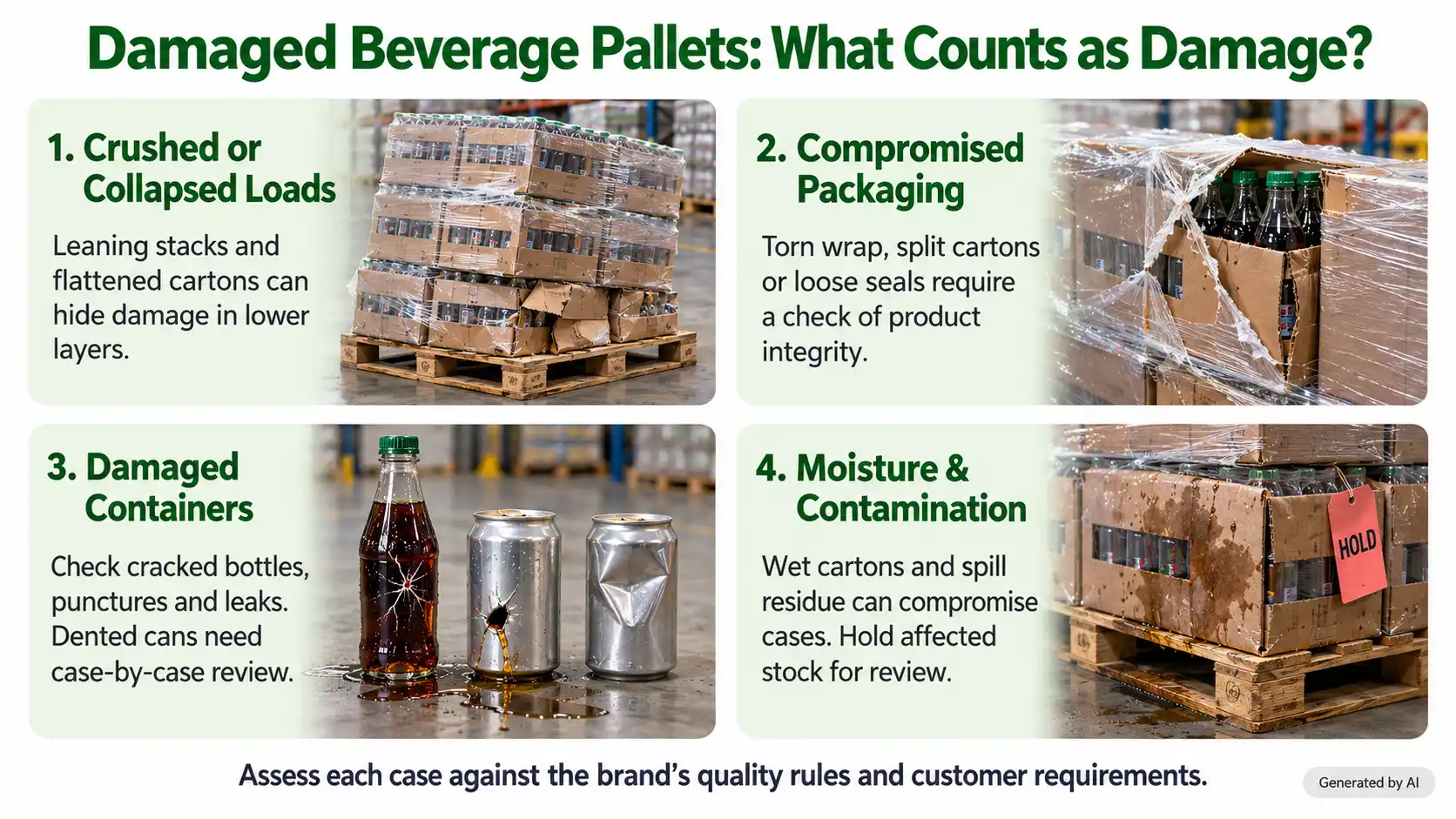
1. Crushed or Collapsed Pallets
Crushed or collapsed pallets are the easiest to spot. For example, a stack can slump, and the bottom layer can flatten under weight it was meant to carry. A hard rack impact or a sharp stop can damage pallets in seconds.
Don’t stop at the lean you can see. All that shifted weight lands on the lower layers, so cases that look fine from the aisle can hide crushed cartons or stressed containers. To catch these signs, walk around the load and look carefully at every side.
2. Torn or Compromised Packaging
Torn or compromised packaging covers ripped shrink wrap and split cartons, as well as open trays and loose seals.
Here you’re asking one thing. What did the damage do to the product?
If a torn outer wrap surrounds sealed, undamaged containers, you’re in one situation. If a split carton lets product shift or pick up dirt, you’re in another. There’s no universal rule as acceptance standards differ by brand and by customer. That’s why you should check whose standard governs your load before you decide anything.
3. Cracked or Shattered Bottles and Dented or Punctured Cans
Now we’re down to the product itself, from cracked or shattered bottles to dented or punctured cans. Any container that leaks adds to the problem, because liquid runs down through the layers below and out toward neighboring pallets. Keep an eye on the floor around the pallet too, since broken glass can end up well beyond it.
Also, before you set aside a dented can, take a second look. It isn’t automatically unsaleable, and it isn’t the same thing as a punctured or leaking one. What happens next comes down to the condition of the package and the standard that applies to your load.
4. Water-Damaged Beverage Cases and Contamination
Water-damaged beverage cases deserve a longer look than a dented can does. A dent changes how a package looks, but moisture and foreign liquid can reach the cartons and the surfaces that touch the product. Pick up a wet case and you’ll feel the difference, because wet cartons lose strength and a soaked case may not survive another move.
Additionally, if the pallet next to yours spilled, cases that never broke can still carry residue, so they belong in the same group. Such wet or contaminated cases should be held for review.
First Response: How to Assess and Isolate a Damaged Load
In the first hours, you should aim to complete the following steps:
1. Make the Area Safe and Keep Damaged Stock Separate
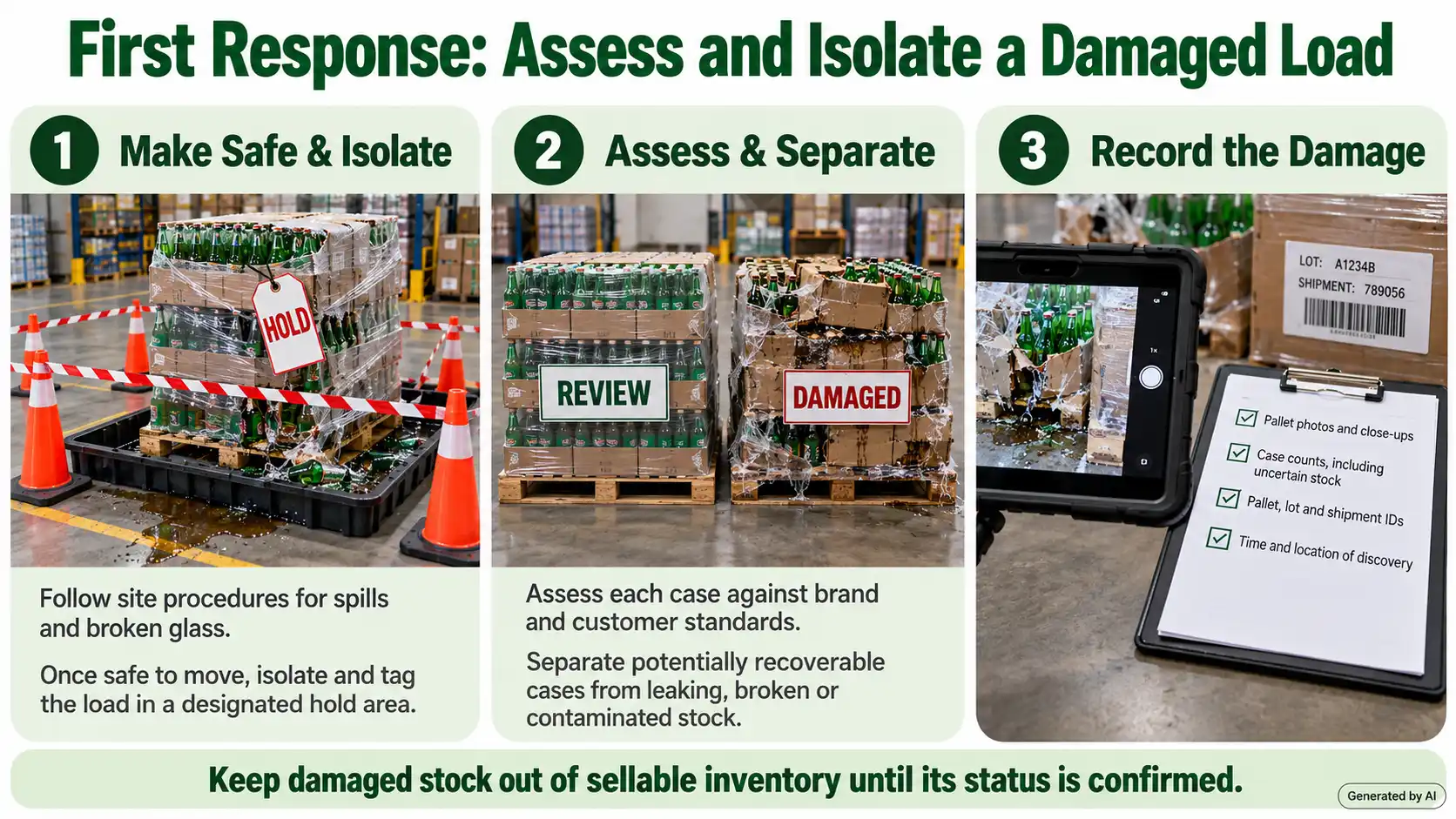
Your safety comes first. Broken glass and spilled liquid are immediate hazards, so follow your site’s own safety procedures before you touch anything. Block off the spot and call in whoever your site designates for glass and spills. Speed matters on the liquid side too, and OSHA’s housekeeping standard (29 CFR 1910.22) requires workplaces and storerooms to stay clean and orderly, and floors to stay clean and, to the extent feasible, dry.
Once the load is safe to move, take it to a designated hold area, well away from sellable stock. That way nobody picks or ships it by mistake, and it stays out of your sellable count. Put a clear tag on it, because the next shift shouldn’t have to guess what they’re looking at.
2. Separating Sellable Cases From Unsaleable Damaged Stock
With the load on hold, you can start sorting. Pull the cases that are intact and dry, with no contamination, and they may go back onto a fresh pallet. Product that is leaking or broken goes to the other side. Together with anything contaminated, it becomes unsaleable damaged stock. Keep the two groups on separate pallets and label both.
You’ll draw the line using the brand’s quality rules and the customer’s acceptance requirements, which is why two operations can reach different calls on the same pallet. And keep in mind that damaged pallet isn’t automatically fully sellable or fully lost, so you should judge each case against the standard that applies to you.
3. Recording the Damage
While the pallet is still in front of you, record what you see. It takes a few minutes and saves you from backtracking later. Here is what to capture:
- Photos of the whole pallet from several angles, and a few close shots of the worst spots
- Counts of sellable and unsaleable cases, including anything you can’t classify yet
- Pallet and lot identifiers, plus shipment or order references
- When and where you found the damage
That record backs you up on claims and inventory adjustments down the line. If a carrier claim comes into play, the details matter. Under 49 CFR 370.3, a written claim to an interstate motor carrier must identify the shipment, assert liability and state a specified or determinable claim amount. Photos, counts and identifiers can help support the claim and reconcile the damaged inventory. Check your contract documents early for filing deadlines instead of assuming a number.
Where the Damage Happened Changes What Comes Next
Based on whether it’s during transit or in your warehouse, the damaged beverage inventory follows a different path:
1. Damage in Transit or at Receiving
When a pallet shows up damaged, you probably aren’t the only party with a stake. The carrier and the shipper can both have one, and so can the receiving party. Responsibility depends on the cause of the damage and on the contract terms and obligations each party holds, so there’s no default answer. In the meantime, photograph the load and note its condition on the receiving paperwork, then keep it separate.
If the damage leads the receiver to turn the load away, you’re handling refused beverage loads, which come with their own resolution path.
Damage may also be discovered after a load has been accepted and stored, which becomes an internal damaged-inventory issue. If previously accepted product is later sent back through the distribution channel, that becomes a distributor return and follows a different path.
2. Damage Inside the Warehouse
If a forklift clips a stack or a stacking job fails inside your building, resolving the damage can fall to your facility, depending on the contract. For distributors and warehousing partners, your goal is a clear disposition decision, meaning what finally happens to the product, made fast enough that a damaged load never sits in active storage or drifts back toward good stock. Decide who makes the call and by when.
What Happens to Damaged Beverage Inventory That Cannot Be Sold
Your hold area buys you time but settles nothing. The next stage resolves where the liquid goes, and what happens to the packaging.
1. Leaking Product and Liquid Disposal
When product is leaking, your instinct is probably to pour it out. Hold off until you confirm the applicable liquid-waste and wastewater requirements, because disposal options can vary by product and location.
2. Material Recovery for Damaged Beverage Packaging
Even when you can’t sell the product, the packaging sometimes still has value as material. Recycling aluminum beverage cans is one example. For context, aluminum cans remain the most recycled drinks package in the US, and 43% of cans shipped in 2023 were recycled.
Working With a Partner for Damaged Pallets and Loads
Some damaged loads sort out in an afternoon. Others pile up, with mixed formats and leaking product on one side and a customer waiting for an answer on the other. If you’re in that second group, you don’t have to carry it alone.
At BeverageDestruction.com, we offer beverage destruction and recycling for damaged loads where we assess the load and coordinate routing of unsaleable product to appropriate processors. We can also arrange pickup and transportation for damaged pallets when you need the load off your dock.
Got a damaged load on hold right now? Contact us with the product type and a rough pallet count, and send a few photos of the damage if you have them.
Frequently Asked Questions
1. What do you do with a pallet of damaged beverages?
Start by making the area safe under your site’s procedures, then move the pallet to a hold area away from sellable stock. Sort intact, dry cases from leaking or contaminated product, and record the damage with photos and counts. Whatever is unsaleable then needs a disposition decision.
2. Can undamaged cases from a damaged pallet still be sold?
Sometimes. You may be able to put intact, dry cases with no contamination back onto a fresh pallet, but that depends on the brand’s quality standards and the customer’s acceptance requirements.
3. Who is responsible for a damaged beverage load, the shipper, the carrier, or the receiver?
The answer depends on where and why the damage happened and on what your contract says, so no party carries responsibility by default. Document the condition early either way.
4. How should leaking beverage product be handled?
Follow your site’s safety procedures and move the affected load to the hold area. The handling of liquid waste has its own rules, so confirm them before deciding where the liquid goes.
5. Can damaged cans or bottles be recycled?
Packaging can sometimes go through material recovery even when the product can’t be sold, depending on the material and on what the processor accepts. Where product remains in the container, beverage depackaging may be needed before the packaging can be routed for material recovery.
6. Does damaged inventory count as unsaleable inventory?
Not automatically. Some of what you’re holding may pass the sort and stay sellable. What fails becomes unsaleable damaged stock, and the quality standards that apply decide which is which.