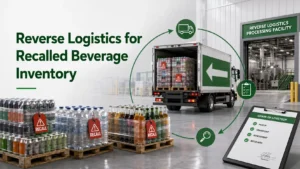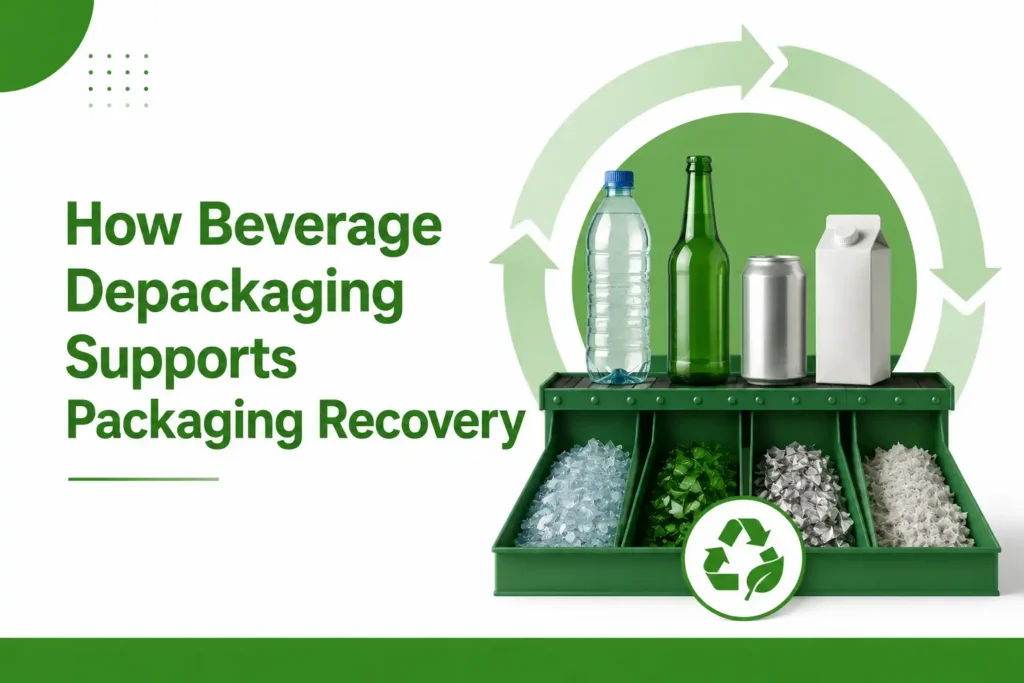
Every pallet of unsaleable beverage inventory contains two things: the product inside and the packaging around it. Most disposal conversations focus on the product; what to do with expired juice, recalled water, off-spec beer. The packaging rarely gets the same attention, and that is where significant recovery value gets left on the table.
Beverage depackaging is the process that changes that. By separating liquid contents from bottles, cans, cartons, and other containers, depackaging makes it possible to route each material stream to the right destination, the liquid to an approved disposal or recovery pathway, the packaging to recycling or material recovery. The result is a measurably different environmental and operational outcome compared to sending full containers directly to landfill.
This guide explains what beverage depackaging is, how the process works, what materials can be separated and recovered, and when businesses should be asking about it.
What Is Beverage Depackaging?
Beverage depackaging is the mechanical separation of liquid contents from their primary packaging. A full bottle of expired water, a sealed can of recalled energy drink, a carton of out-of-code juice; all of these are single units containing two distinct materials. Depackaging separates them so each can be handled appropriately.
The term is sometimes used interchangeably with “beverage destruction,” but they are not the same thing. Destruction refers to permanently removing a product from commerce. Depackaging is one step within that process; the step that physically separates product from packaging so both streams can be managed responsibly. A beverage destruction program that includes depackaging produces a different outcome than one that simply landfills full containers.
Depackaging applies to packaged beverage inventory: sealed bottles, cans, cartons, pouches, and kegs. It is distinct from bulk liquid disposal, where liquid is already separated from packaging and handled as a standalone stream. For businesses managing beverage packaging recovery during destruction and recycling, understanding what depackaging involves is the starting point for evaluating what recovery is possible.
Why Depackaging Matters for Unsaleable Beverage Products
The scenarios that trigger a depackaging requirement are more common than most operations teams expect:
- Expired or out-of-code inventory: cases past their printed date that cannot be redistributed through normal channels
- Recalled full-container product: where the product must be permanently destroyed and documented as such
- Damaged or compromised inventory: product that cannot be sold due to physical damage, broken seals, or storage condition issues
- Off-spec or discontinued SKUs: overstock, seasonal inventory, reformulated products, or brand discontinuations
- Label or formulation issues: product that fails QA or regulatory compliance after filling
In all these scenarios, the product inside the container must go, but the container itself does not have to go with it. The packaging is often still intact and recoverable. Depackaging is what makes that recovery possible.
The scale of the opportunity is significant. Between 2015 and 2024, an estimated 1.5 trillion beverage containers were wasted in the U.S., including 785 billion PET bottles, 553 billion metal cans, and 220 billion glass bottles (Reloop Platform, 2025). Not all that waste involved unsaleable inventory but the materials involved are the same ones that a depackaging and recovery program can divert.
How the Beverage Depackaging Process Works
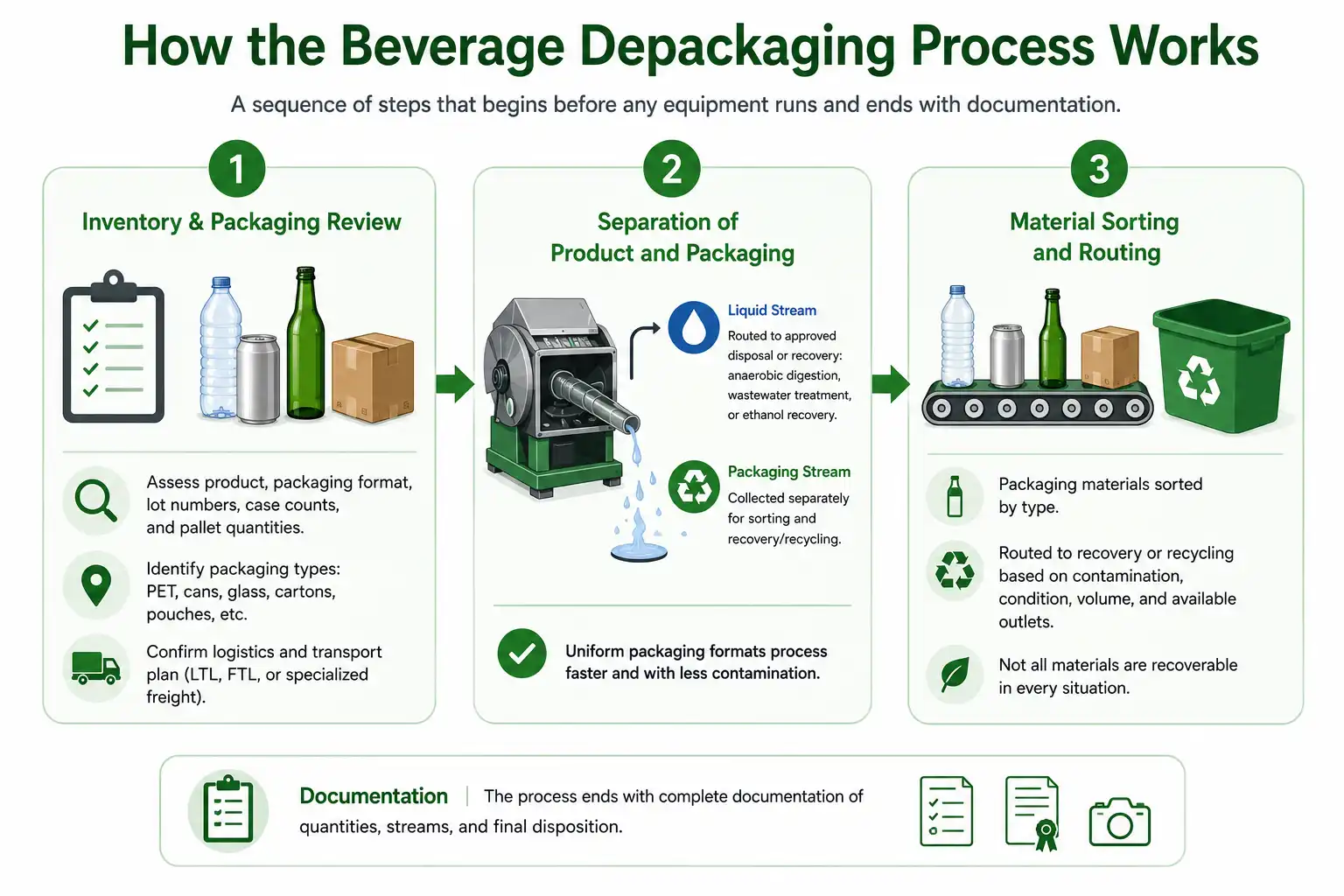
Depackaging is not a single action; it is a sequence of steps that begins before any equipment runs and ends with documentation. Here is what a typical process looks like:
Inventory and Packaging Review
Before depackaging begins, the inventory needs to be assessed. This includes confirming product type, packaging format, lot numbers, case counts, and pallet quantities. The packaging format matters because different container types: PET bottles, aluminum cans, glass bottles, cartons, flexible pouches require different depackaging methods and produce different material streams.
The mechanics used to separate food and beverages from their packaging employ variations on applied force, including tangential shearing action, vertically-oriented hammering, horizontal or vertical pressure through a metal sieve or screen, or combinations of these methods (BioCycle, 2025). The appropriate method depends on the packaging type and the condition of the product.
This review stage is also when logistics are confirmed, where the inventory is located, how it will be transported to the processing facility, and whether the volume requires LTL, FTL, or specialized freight. For beverage pickup and logistics coordination, transport planning starts here.
Separation of Product and Packaging
The depackaging step mechanically opens or separates the container to release the liquid contents. The liquid and the packaging become two separate material streams at this point.
The liquid is then routed to an approved disposal or recovery pathway: anaerobic digestion, permitted wastewater treatment, or in some cases ethanol recovery for qualifying alcohol products. The packaging is collected separately for sorting and routing to recovery or recycling.
The efficiency of this step depends on the consistency of the packaging format. A uniform lot of one container type processes faster and with less material contamination than a mixed lot of multiple formats. For businesses with mixed inventory, a packaging format inventory upfront helps the depackaging operation run more predictably.
Material Sorting and Routing
Once separated, packaging materials are sorted by type. PET plastic bottles, aluminum cans, glass bottles, cardboard cases, shrink wrap, and other secondary packaging each have different recovery pathways. Not all materials are recoverable in every situation; recovery depends on contamination levels, packaging condition, volume, and available processing outlets at the time of the engagement.
The general recovery picture for major beverage packaging materials, based on current data:
|
Material |
Notes on Recovery |
|
PET plastic bottles |
The U.S. PET bottle collection rate reached 33% in 2023, the highest since 1996 (NAPCOR, 2024); recovered PET from depackaging may feed into this stream |
|
Aluminum cans |
The aluminum beverage can recycling rate was 43% in 2023 (Resource Recycling, 2024); aluminum is the most valuable material in the recycling stream at approximately $991 per ton (Packaging Digest, 2024) |
|
Glass bottles |
Glass recycling rate was approximately 41.4% (Resource Recycling, 2025); recovery depends on color sorting and contamination level |
|
Cardboard / OCC |
Cardboard recycling rate estimated between 71–76% (Packaging Dive, 2024); secondary packaging like cases and trays typically routes to OCC recovery |
|
Cartons |
Complex multi-layer structure (paper, plastic, aluminum); recovery requires specialized hydropulping or solvent-based processes |
|
Flexible pouches / shrink wrap |
Recovery options more limited; typically routes to waste-to-energy or landfill depending on facility capability |
Documentation and Reporting
For businesses where recall compliance, brand protection, sustainability reporting, or chain-of-custody records are required, the documentation generated through a depackaging engagement matters as much as the physical process.
Where applicable, documentation may include intake manifests, chain-of-custody records, weight or volume verification for each material stream, and a certificate of destruction confirming the product was permanently removed from commerce. The documentation structure and what is available depends on the program and processor; confirm what records will be produced before the engagement begins.
For common questions on what documentation a beverage destruction and depackaging program produces, the beverage destruction and recovery FAQ covers the most frequent questions.
Packaging Materials That May Be Recovered
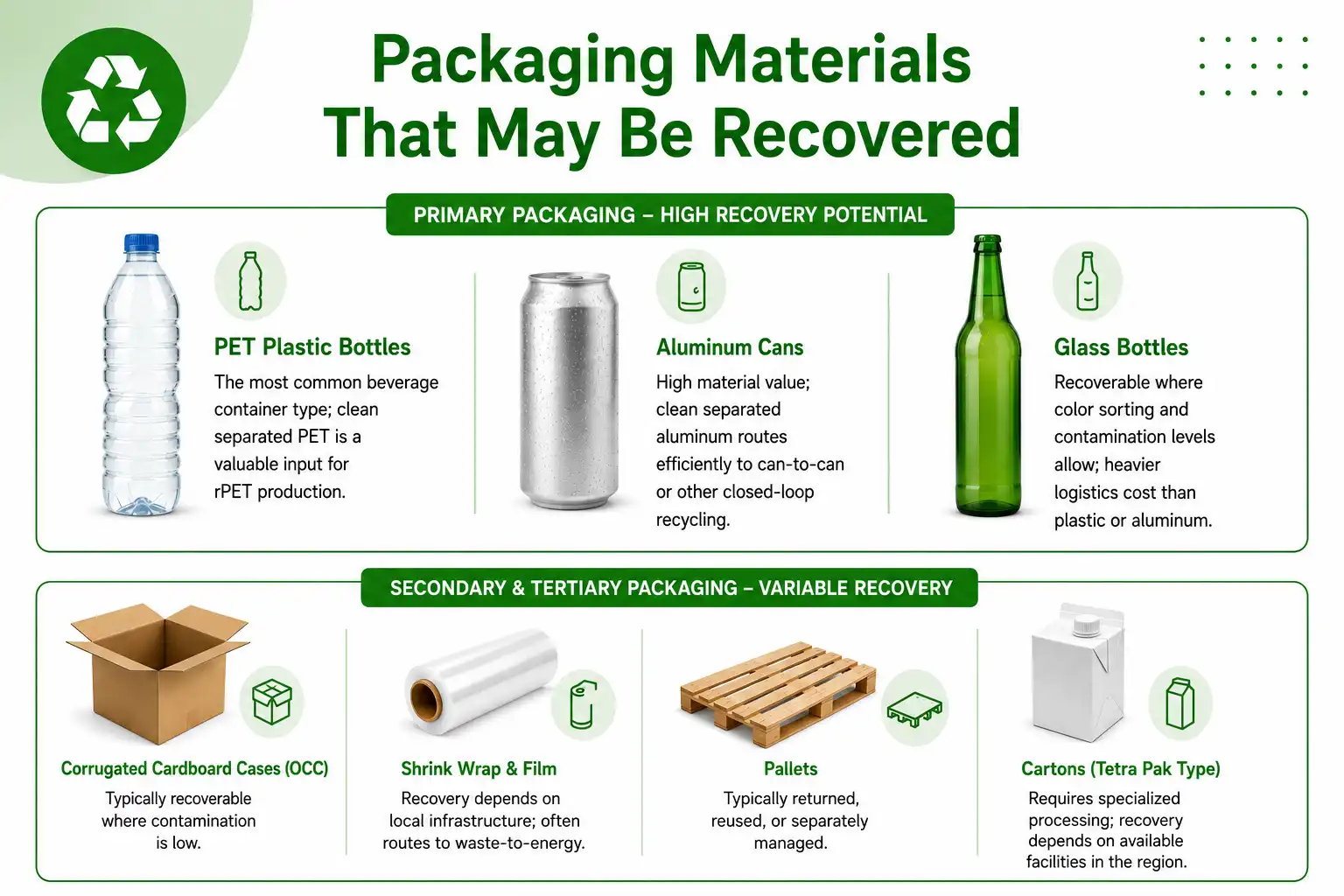
Here is a practical reference for what packaging types typically generate recoverable material streams through a depackaging engagement:
Primary packaging – high recovery potential:
- PET plastic bottles – the most common beverage container type; clean separated PET is a valuable input for rPET production
- Aluminum cans – high material value; clean separated aluminum routes efficiently to can-to-can or other closed-loop recycling
- Glass bottles – recoverable where color sorting and contamination levels allow; heavier logistics cost than plastic or aluminum
Secondary and tertiary packaging – variable recovery:
- Corrugated cardboard cases (OCC) – typically recoverable where contamination is low
- Shrink wrap and film – recovery depends on local infrastructure; often routes to waste-to-energy
- Pallets – typically returned, reused, or separately managed
- Cartons (Tetra Pak type) – requires specialized processing; recovery depends on available facilities in the region
Important caveat: recovery options depend on the condition of the packaging, contamination level, volume, location, and what processing outlets are available at the time of the engagement. Not every material from every lot will have a viable recovery pathway. A depackaging provider should be transparent about what materials will and will not be recovered, and how; before the engagement begins.
How Depackaging Supports PET and Plastic Recovery
PET plastic is the dominant packaging material for beverage products, and it is also the packaging type where the gap between recovery potential and actual recovery is most significant. The North American PET bottle collection rate was 39.2 percent in 2024, remaining well above the 30 percent threshold established by the Ellen MacArthur Foundation to demonstrate that recycling works in practice and at scale (NAPCOR via Business Wire, 2025). That means more than 60% of PET bottles still do not make it into the recycling stream.
Depackaging creates a different entry point for this material. When unsaleable packaged beverage product is processed through a depackaging program, the PET bottles are separated from the liquid stream and can be collected for recycling as a clean, identifiable batch; rather than mixed into the general waste stream or sent to landfill as full containers.
The average amount of post-consumer recycled PET used in U.S. bottles and jars reached 16.2% in 2023; the highest level ever recorded (NAPCOR, 2024). Businesses that route recovered PET from depackaging into verified recycling pathways are contributing to the supply of recycled content that makes those metrics possible.
For businesses with specific PET recovery requirements; whether for sustainability reporting, retailer ESG commitments, or internal circular economy goals, more detail on what happens to recovered plastic from beverage destruction programs is covered on the PET plastic recycling for the bottling industry page.
Depackaging, Destruction, and Documentation
For recalled product, brand protection situations, or any engagement where a product must be verifiably removed from commerce, depackaging is not just an environmental consideration; it is part of the documented destruction process.
When a depackaging program is part of a formal destruction engagement, documentation may include:
- Intake manifest – records product type, lot numbers, case counts, and pallet quantities at the start of the engagement
- Chain-of-custody records – documents who had possession of the product at each stage, from pickup to processing
- Material stream records – confirms what happened to the liquid and each packaging material stream after separation
- Certificate of destruction – where applicable, confirms the product was permanently destroyed and cannot re-enter the market; must reference lot codes matching the original recall or disposal record
The documentation structure that a depackaging engagement produces matters for brands managing recalls, retail partner compliance, internal sustainability reporting, or inventory write-off documentation. Confirm what records will be produced, and in what format, before committing to a provider.
When to Ask About Beverage Depackaging
A depackaging conversation is worth having when any of the following apply:
- Inventory is in full, sealed containers that cannot be sold, donated, or redistributed
- The volume is measured in pallets or truckloads; high enough that full-container landfill disposal is both costly and avoidable
- The product has been recalled and documentation of destruction is required to close the recall record
- There is a mix of packaging formats in the inventory: bottles, cans, cartons, and understanding what can be recovered from each is part of the planning process
- Sustainability or ESG reporting goals require documented diversion of packaging from landfill
- Brand protection requires proof that unsaleable product was destroyed and cannot resurface in unauthorized channels
- A retail partner or licensing agreement requires a certificate of destruction as a condition of return or removal
If inventory is bulk liquid rather than full packaged containers, depackaging is not the relevant step; bulk liquid disposal has its own pathway. The depackaging question applies specifically to sealed, packaged product.
Conclusion
Unsaleable beverage inventory does not have to be a write-off for both the product and the packaging. Depackaging separates what can be recovered from what cannot and creates the documentation trail that compliance and sustainability programs increasingly require.
For businesses evaluating depackaging and recovery options for packaged beverage inventory that can no longer be sold, our beverage packaging recovery during destruction and recycling services cover what is possible – from logistics and separation through to material routing and documentation.
Frequently Asked Questions
1. What does beverage depackaging mean?
Beverage depackaging is the mechanical separation of liquid beverage contents from their primary packaging. It creates two separate material streams: the liquid, which is routed to an approved disposal or recovery pathway, and the packaging, which may be recovered for recycling depending on material type, condition, and available processing outlets.
2. Can full beverage containers be depackaged?
Yes. Full, sealed containers: bottles, cans, cartons, pouches, may be processed through a depackaging program depending on the product type, packaging format, volume, and facility requirements. The depackaging step opens or separates the container to release the liquid before routing each stream appropriately.
3. What packaging materials can be recovered?
Common recoverable materials include PET plastic bottles, aluminum cans, glass bottles, and corrugated cardboard cases. Recovery depends on packaging condition, contamination levels, volume, and available processing outlets at the time of the engagement. Not every material type will have a viable recovery pathway in every situation; confirm with the provider upfront.
4. Is depackaging the same as beverage destruction?
No. Beverage destruction refers to permanently removing a product from commerce. Depackaging is one step within a destruction or recycling program; the step that physically separates product from packaging. Destruction addresses the commercial and compliance outcome; depackaging supports the material recovery outcome. A beverage destruction program may or may not include depackaging, depending on the inventory type and the program structure.
5. Does depackaging support sustainability reporting?
It can. When a depackaging program includes documentation of what materials were separated and where they were routed, that information may support sustainability reporting, landfill diversion metrics, ESG disclosures, or retailer sustainability requirements. The documentation available depends on the program and the processor; confirm what records will be produced before the engagement begins.
6. When should a business ask about beverage depackaging?
When the inventory is packaged, full-container product that cannot be sold, recalled, expired, damaged, off-spec, or discontinued, and the volume justifies a structured program. Also relevant when sustainability or compliance goals require documentation of packaging recovery, or when a retail partner or recall record requires a certificate of destruction as part of the process.