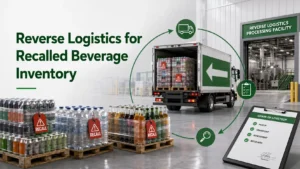
Not every pallet ships. Some expires, gets recalled, or simply runs out of road — and without a plan, it defaults to landfill.
Unsaleable beverage inventory landfill exposure isn’t inevitable. It’s what happens when triage, diversion, and documentation aren’t in place before the inventory becomes a problem. The cost isn’t just waste: it’s lost packaging recovery value, gaps in sustainability reporting, and write-offs that didn’t have to go that way.
This is a practical guide to reducing that exposure through diversion, recovery, and beverage destruction and recycling programs built for exactly this.
What Landfill Exposure Actually Means for Beverage Inventory
Landfill exposure is the gap between inventory that can no longer be sold and a plan for what happens to it next.
That gap shows up in familiar places. Expired stock sitting in a warehouse with no disposal route. A recalled lot where the focus was on speed, not what comes after. A damaged pallet written off before anyone checked whether the packaging was still recoverable. Seasonal overstock cleared out to make room and landing in a roll-off by default.
Unsaleable beverage inventory landfill exposure is rarely a deliberate choice. Most of the time, it’s what happens in the absence of one. No processor lined up. No diversion pathway confirmed. No plan until the inventory became a problem — and by then, the options had narrowed.
Why Beverage Inventory Becomes Unsaleable
Catching the issue early is crucial because the diversion options available at thirty days past code look very different from the ones available at ninety.
|
Inventory Type |
Common Cause |
Diversion Consideration |
|
Expired or out-of-code products |
Date coding or shelf-life limits reached before sale |
May require destruction confirmation and packaging recovery before any diversion route is confirmed |
|
Recalled products |
Safety, quality, or regulatory concern |
Requires documented chain of custody and destruction records; diversion options exist but must be confirmed with applicable parties |
|
Damaged pallets or cases |
Handling, transport, or warehouse damage |
Product may be unsaleable but packaging can often be sorted and recovered separately |
|
Seasonal or discontinued inventory |
Overstock, obsolete labels, formulation updates, or SKU discontinuation |
Often suitable for planned beverage waste diversion through structured destruction and recycling |
|
Leaking or compromised containers |
Container failure or contamination |
Requires careful handling and containment assessment before recycling options can be evaluated |
The details inside each category matter. Recalled energy drinks in intact aluminum cans is a different diversion problem than a pallet of leaking glass bottles. Volume, format, condition, and location all shape what recovery looks like.
The Business Case for Getting This Right
Sustainability language aside, there are concrete operational and commercial reasons to take landfill exposure seriously. These include:
- Lost packaging recovery value. Aluminum, PET, glass, and corrugated cardboard all have market value. Sending full containers to landfill means both the product and the packaging disappear into the same bin — and neither generates anything. A structured beverage landfill diversion program changes that outcome.
- Sustainability reporting exposure. Diversion metrics increasingly show up in ESG reports, retailer scorecards, and brand commitments. If you cannot document what happened to unsaleable inventory, you cannot demonstrate diversion. That gap is getting harder to explain.
- Storage costs accumulation. Inventory waiting for a decision costs money every day it sits. The longer it waits, the fewer options remain.
- Brand protection. Unsaleable beverage products that are not properly destroyed can resurface. The destruction record matters as much as the disposal itself.
Beverage Landfill Diversion Options
The right route depends on product condition, packaging format, volume, contamination level, and available processing capacity. Here are the main options:
|
Diversion Option |
Best Fit |
What to Know |
|
Beverage destruction and recycling |
Packaged or bulk unsaleable inventory |
The most structured option — covers logistics, processing, and documentation |
|
Depackaging and material separation |
Full sealed containers: cans, bottles, cartons, pouches |
Separates liquid from packaging so each stream can be routed independently |
|
Packaging recovery |
Aluminum cans, PET bottles, glass, corrugated cardboard |
Recovery depends on contamination level and available processing outlets |
|
Ethanol recovery |
Eligible alcohol or sugar-based liquids post-depackaging |
Eligibility varies by product composition, permits, and applicable regulations |
|
Anaerobic digestion |
Non-alcoholic liquids: juices, teas, soft drinks, flavored water |
For separated liquid streams only — not applicable to full containers |
|
Waste-to-energy or alternative recovery |
Streams not suited for direct recycling |
Better than landfill where regional processing access exists |
Beverage recycling options are not interchangeable — and that is the point. Intact aluminum cans from a single recalled SKU require a different approach than a mixed pallet of expired glass with damaged labels.
How to Build an Unsaleable Beverage Inventory Triage Process
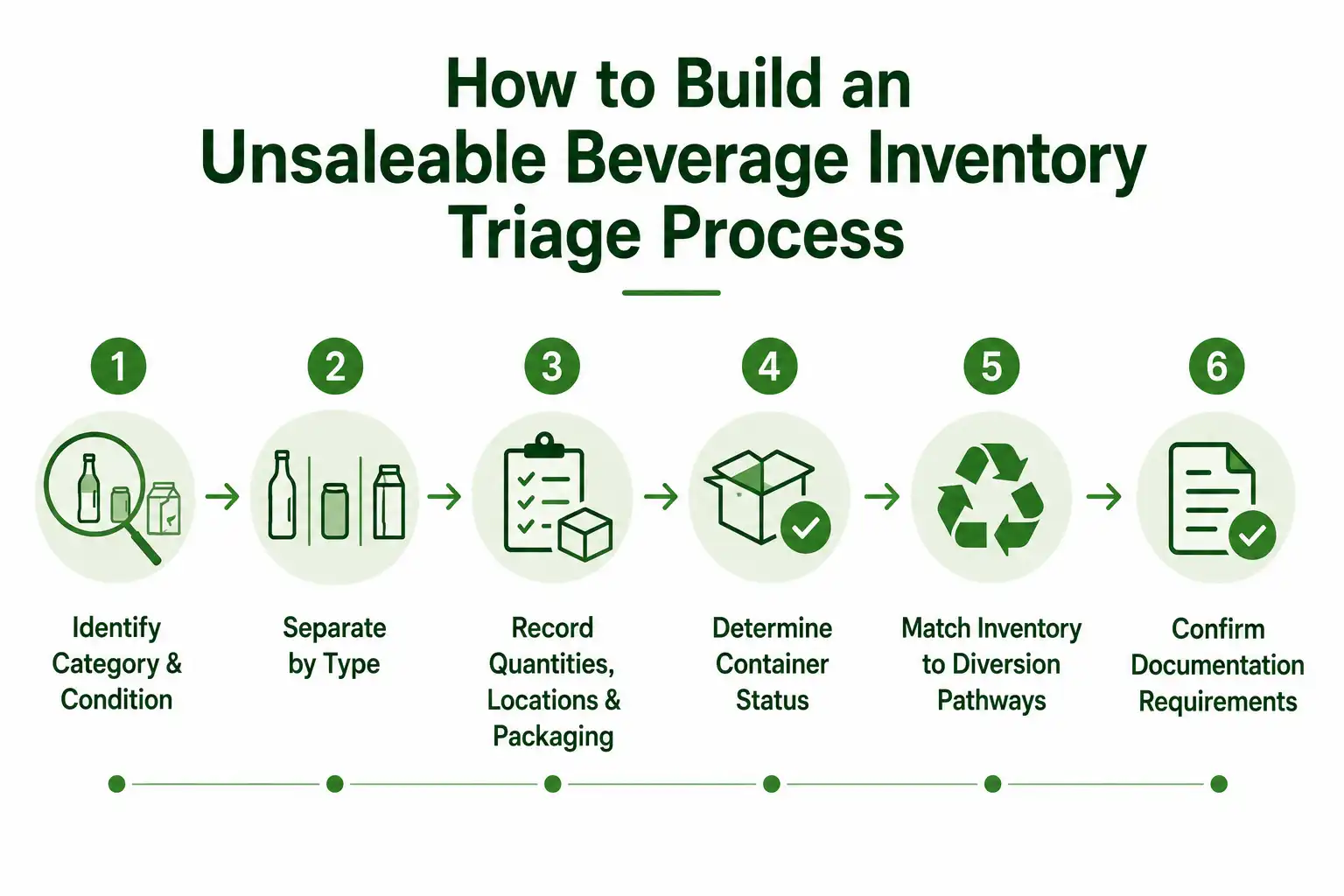
A triage process does not need to be elaborate. It needs to exist before inventory becomes a storage problem and before diversion options start closing off.
- Step 1: Identify category and condition. Is this an expired seasonal line, a damaged pallet from a transit claim, a recalled lot, or overstock from a discontinued SKU? The category determines which diversion options are available and which questions to ask first.
- Step 2: Separate by type. Recalled products, expired products, damaged cases, and overstock each have different documentation requirements and different diversion pathways. Mixing them together in storage makes it harder to plan and harder to document.
- Step 3: Record quantities, locations, and packaging formats. Pallet counts, case counts, lot numbers, and packaging types (PET, glass, aluminum, carton, pouch) all need to be documented before anything moves. For companies recycling beverage cartons, this record supports manifests, certificates of destruction, and diversion reporting.
- Step 4: Determine container status. Full sealed containers require depackaging before liquid and packaging can be separated. Bulk or partially emptied product is handled differently. This distinction shapes both the processing route and the logistics.
- Step 5: Match inventory to diversion pathways. This is where knowing your packaging format mix matters. PET bottles, aluminum cans, and corrugated cardboard each have established recovery pathways. Mixed loads with leaking containers have a narrower set of options.
- Step 6: Confirm documentation requirements before committing to a processor. For recalled product, lot-level tracking through the destruction process is required. For sustainability reporting, diversion confirmation records need to be produced. Know what documentation you need before committing to a processor.
Packaging Recovery and Beverage Recycling Options
Full containers are not a single waste problem. The product inside may be unsaleable. The packaging around it often has real recovery value. That’s why treating both as the same write-off is one of the more avoidable losses in unsaleable beverage inventory management.
The materials tell the story: aluminum is among the most valuable recovered materials by weight, PET bottle collection hit its highest rate since 1996 in 2023, and corrugated cardboard recycling has held above 70 percent consistently. These are active markets, not niche ones.
What stands between a full container and those markets is a depackaging step. Liquid and packaging must be mechanically separated before either stream can be routed appropriately — liquid to anaerobic digestion or permitted treatment, packaging to material-specific recycling.
Packaging recovery is a realistic outcome for most intact beverage formats. What varies is condition, contamination level, and available processing capacity. A good partner will tell you what is recoverable before the engagement starts, not after.
Documentation That Supports Landfill Diversion Reporting
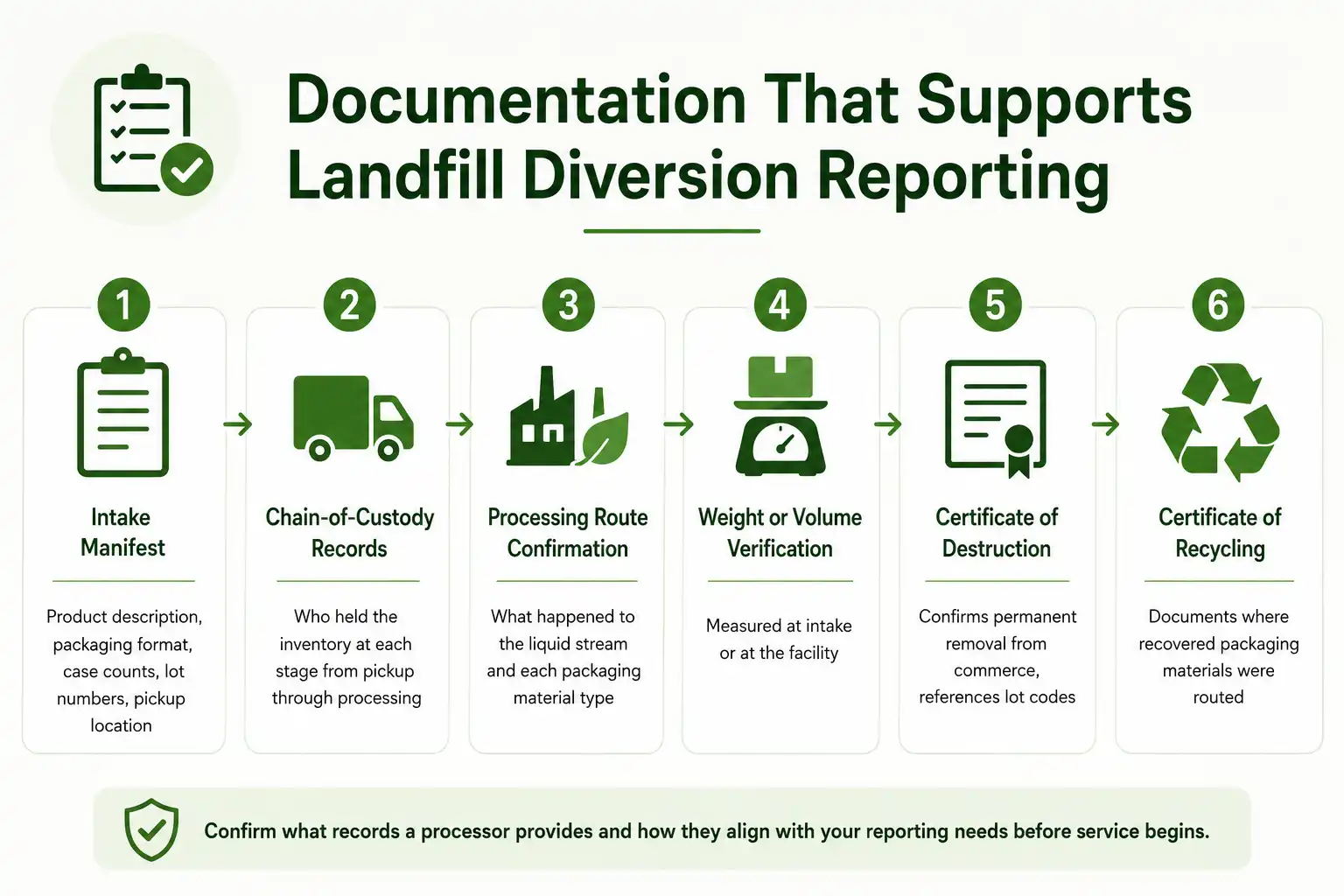
Diversion without documentation is not verifiable diversion. That distinction matters when sustainability reporting, retailer ESG scorecards, or recall records are involved.
The core set of records that support beverage waste diversion tracking is consistent across most programs:
- Intake manifest — product description, packaging format, case counts, lot numbers, pickup location
- Chain-of-custody records — who held the inventory at each stage from pickup through processing
- Processing route confirmation — what happened to the liquid stream and each packaging material type
- Weight or volume verification — measured at intake or at the facility
- Certificate of destruction — confirms permanent removal from commerce, references lot codes
- Certificate of recycling — documents where recovered packaging materials were routed
Confirm what records a processor will produce before committing. The difference between a volume-based diversion record and lot-level detail with material routing specifics matters more than it sounds when reporting time comes.
When to Work With a Beverage Destruction and Recycling Partner
Whether you need a structured program depends on a few factors:
- Volume. One damaged case is a disposal task. Multiple pallets across several SKUs is a program, and the gap between a managed engagement and an improvised one grows with every pallet.
- Recalls. Lot-level beverage recall documentation, verified chain of custody, and a destruction confirmation are not things a standard waste hauler produces. They require a processor who builds that into the engagement from the start.
- Complex inventory. Mixed formats, leaking containers, bulk liquid alongside full cases, or inventory spread across multiple locations all require more coordination than a single pickup can provide.
- Storage pressure. When unsaleable inventory is occupying active warehouse space, the cost of waiting often exceeds the cost of acting.
Beverage destruction and recycling programs handle all of it — logistics, processing, recycling, and documentation in a single engagement.
Frequently Asked Questions
1. What is landfill exposure for unsaleable beverage inventory?
Landfill exposure is the risk that unsaleable beverage products or their packaging end up in landfill because no diversion, recycling, or recovery plan was in place when it was needed.
2. Why do beverage products become unsaleable?
Products reach their code date before distribution. Recalls pull inventory from commerce. Transport or warehouse damage compromises cases or containers. SKU discontinuations and formulation changes leave overstock with nowhere to go. Out-of-code beverage products, damaged pallets, and recalled lots are the most common categories.
3. How can beverage companies reduce landfill exposure?
Start with a triage process that identifies product category, condition, packaging format, and quantity before inventory sits too long. From there, match inventory to the right diversion pathway — whether that is a structured beverage destruction and recycling programs engagement, depackaging and packaging recovery, or material-specific recycling routes. Documentation throughout makes diversion verifiable.
4. What are beverage landfill diversion options?
Beverage landfill diversion options include destruction and recycling programs, depackaging and material separation, packaging recovery for aluminum, PET, glass, and corrugated cardboard, liquid stream routing to anaerobic digestion or permitted wastewater treatment, and ethanol recovery for qualifying alcohol products. The right option depends on product type, format, condition, volume, and available processing infrastructure.
5. Can expired beverages be recycled?
Often yes. Out-of-code beverage products in intact sealed containers can typically be processed through depackaging, separating liquid from packaging so each stream can be routed appropriately. Recovery potential depends on packaging condition, contamination level, and processing capacity.
6. Can packaging be recovered from full beverage containers?
Yes, but full containers require a depackaging step first. Once separated, the packaging typically has viable recovery pathways. Its recovery produces a measurably different outcome than sending full containers to landfill.
7. What documentation supports landfill diversion reporting?
Core records include an intake manifest, chain-of-custody documentation, weight or volume verification, processing route confirmation, and a certificate of destruction or recycling where applicable. Confirm what a processor will produce before the engagement begins.
8. When should a company use a beverage destruction and recycling program?
When volume exceeds what internal processes can handle, when recall documentation requirements apply, when inventory is mixed or complex, or when sustainability reporting requires verified diversion confirmation. These are exactly the scenarios beverage destruction and recycling programs are built for.