
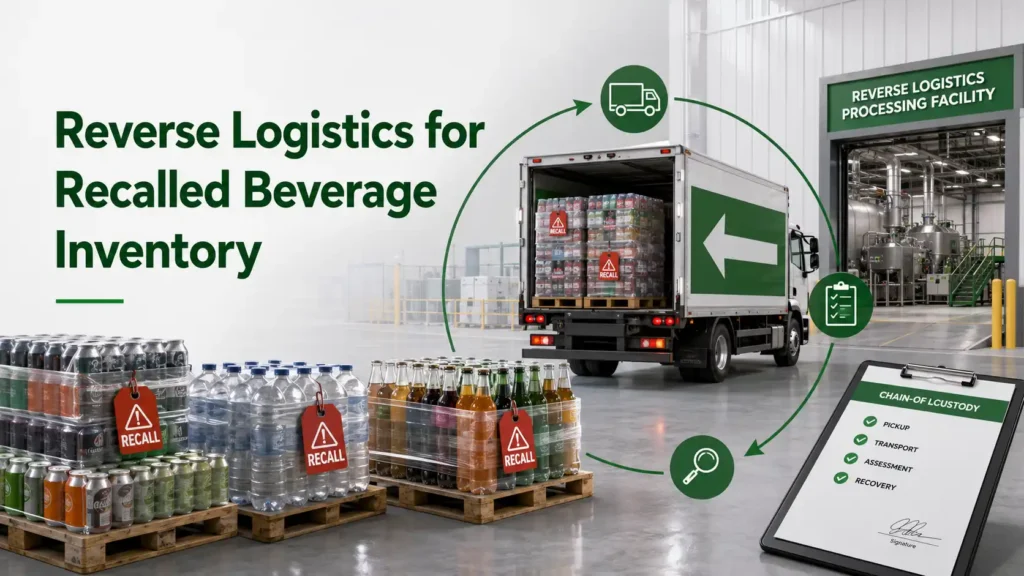
Reverse logistics is the movement of product backward through a supply chain, away from a shelf rather than toward one. For most industries, that means customer returns. For beverage companies, it usually means cases and pallets moving backward because they were recalled, expired, damaged in transit, refused at delivery, or pulled from a lineup entirely.
This guide covers reverse logistics for beverages the way it actually plays out at commercial scale, how the process runs, the decisions involved along the way (LTL or full truckload, one vs multiple sites), and when internal handling starts to strain enough that a dedicated partner makes sense.
What Is Reverse Logistics for Beverages?
In general supply chain terms, what is reverse logistics comes down to everything involved in moving goods from their final destination back through the chain for return, repair, resale, or disposal. Retailers deal with this constantly through customer returns and restocking.
On the other hand, reverse logistics for beverages typically covers five categories:
- Expired or out-of-code stock
- Recalled or retailer pull-back product
- Damaged or freight-compromised pallets
- Shipments refused at delivery
- Discontinued SKU overstock sitting in a warehouse with nowhere left to go
None of these categories move forward through a normal sales channel again. Expired or out-of-code beverage products, for instance, still have to be tracked, picked up, and processed the same way a recall does, just without the added urgency.
How Reverse Logistics Works for Recalled and Unsaleable Beverage Inventory
At commercial volume, reverse logistics for beverages follows a practical sequence:
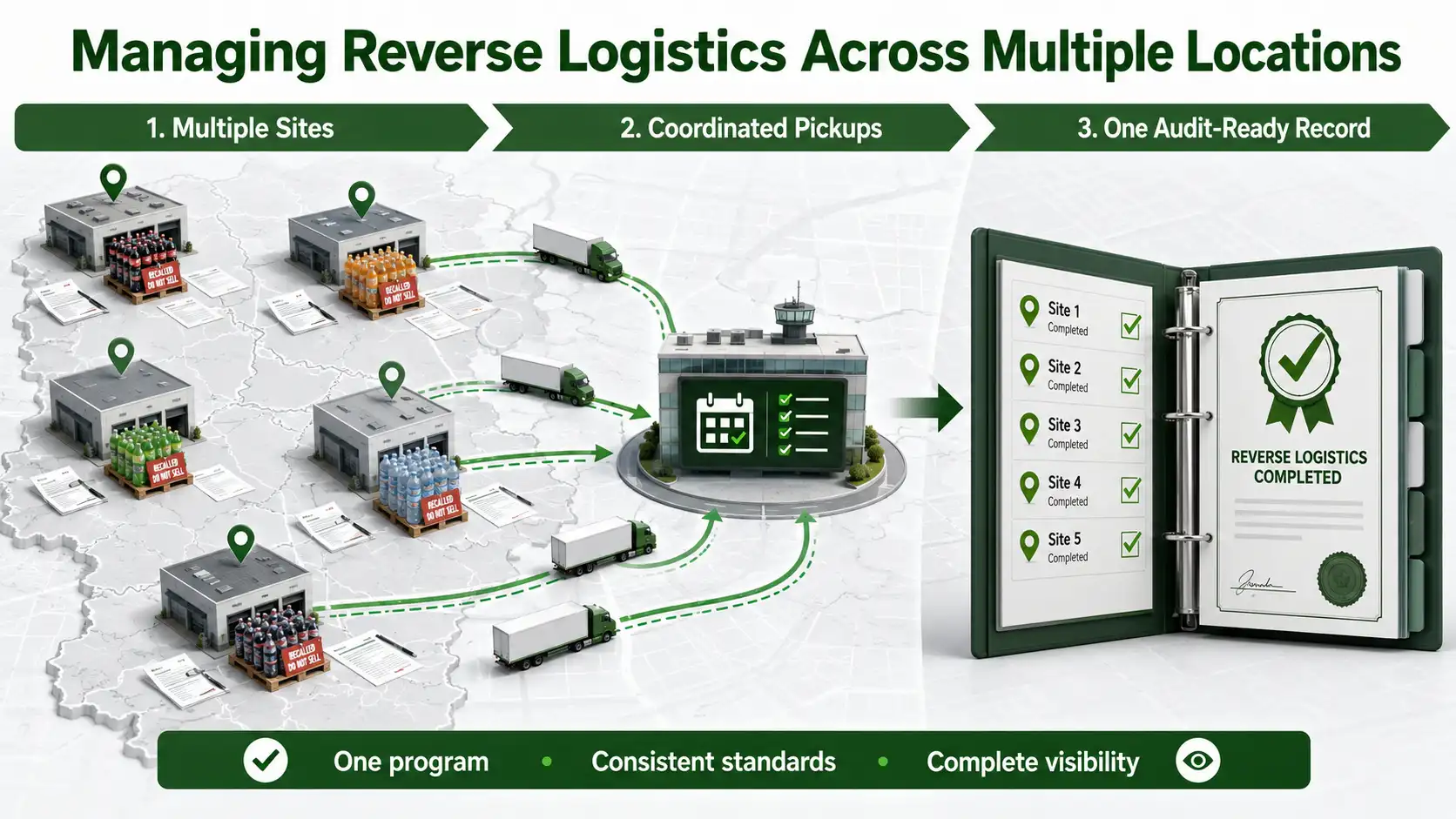
1. Assessing the Inventory
Before anything gets picked up, a reverse logistics program needs a few basic facts:
- Product type
- Packaging format
- Volume
- Location
- Whether alcohol is involved
That last detail matters more than it sounds like it should, since alcohol content changes which regulations, permits, and destruction methods apply.
This step is also where a company gets its first real look at how much unsaleable beverage inventory it is carrying, and where. A single answer to that question often changes the transportation plan entirely, especially once a company realizes the volume is spread across more than one facility.
2. Choosing Less-Than-Truckload (LTL) or Full-Truckload Pickup
Once the inventory is assessed, the next decision is how it moves. This is an important cost factor as transportation alone can account for up to 60% of total reverse logistics expenses.
Smaller quantities or single-site pickups typically make more sense as LTL beverage shipments, sharing truck space with other freight rather than paying for a dedicated trailer.
Larger volumes, high pallet counts, or single-destination clearances usually make more sense as full-truckload beverage pickups instead, since consolidating everything onto one trailer often costs less per pallet at that scale.
Note: Not all waste transportation companies are set up to make that call correctly for beverage destruction logistics and pickup specifically. Liquid weight, carbonation, alcohol content, and mixed packaging all affect how a load should be built and routed, which is different from how a standard freight carrier plans a shipment.
3. Chain-of-Custody Documentation
Every handoff in this process, from initial pickup through final processing, needs a record behind it. Without that trail, there is no way to confirm that recalled or unsaleable product did not quietly re-enter commercial channels somewhere along the way.
This documentation is also what supports an internal audit later. Companies coordinating reducing unsaleable beverage inventory as part of this process typically receive records at each stage, not just a single certificate at the end, so gaps do not appear months later when someone actually needs the paperwork.
That stage-by-stage recordkeeping is usually what separates a program built for beverages from a generic hauling arrangement.
Why Recalled Beverage Pickup Needs a Different Process
Routine unsaleable stock can usually wait a few days for a scheduled pickup. Recalled beverage pickup cannot. Recalls carry timing pressure and documentation stakes, and both need to be addressed from the moment the recall is issued. Every day a recalled batch sits unprocessed is another day it has to be accounted for in an active investigation.
1. Information to Have Ready Before Pickup
A recall moves faster when the basic information is already gathered. Lot codes matter more here than almost anywhere else in this process, since they are what ties a specific batch to a specific recall, and what will later confirm that the right product was removed.
2. Documentation That Closes Out a Recall
Beverage recall documentation is not just a pickup receipt. It is the complete trail from collection through final processing that confirms the recalled product is out of commercial channels for good. That record is also what a company pulls out later if a regulator, retailer, or internal compliance team asks for proof that food and beverage regulatory compliance was maintained from pickup through final processing.
Managing Reverse Logistics Across Multiple Beverage Distribution Locations
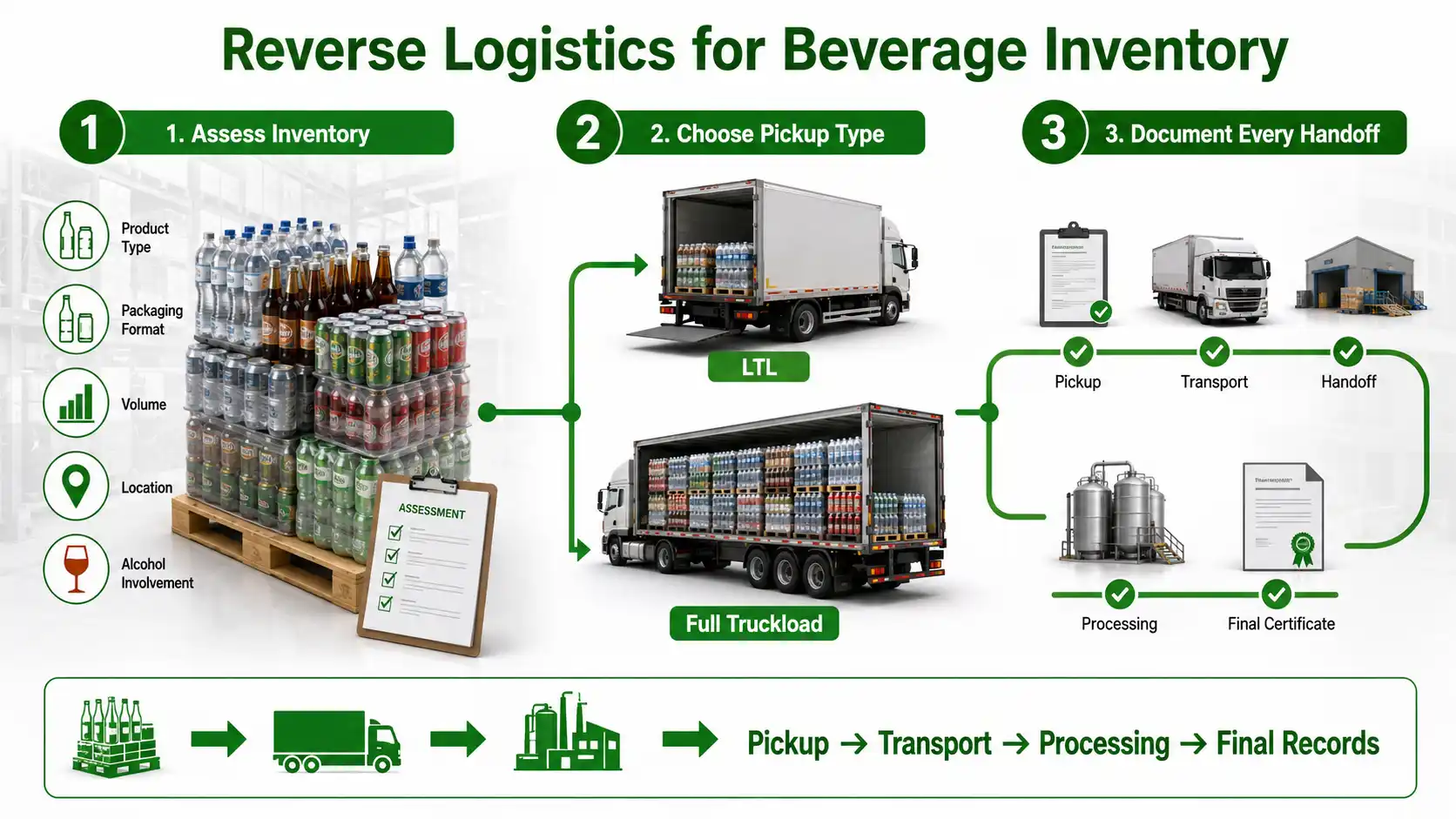
For distributors and 3PL teams, unsaleable or recalled product rarely sits in one place. It is usually spread across several warehouses or regional distribution centers, in smaller quantities at each site rather than one large volume in one location. That spread turns multi-location inventory removal into its own logistics problem, separate from the volume itself.
1. Why Multi-Site Inventory Is Its Own Problem
Handled site by site, a multi-location clearance adds up to more coordination overhead than a single-site pickup of the same total volume, and more chances for one location’s documentation to drift from another’s. A team managing five warehouses this way is effectively running five separate small programs instead of one.
2. Consolidating Pickup Across Warehouses
Rather than scheduling each site separately, multiple warehouses, distribution centers, or retail locations can run under one coordinated program instead, with pickups scheduled against the same standards at every site.
3. One Set of Records Across Every Site
The real value in a multi-site program is not just consistent pickup. It is one coherent set of records covering every location, so a distributor closing out a multi-site clearance ends up with a single audit-ready file instead of a stack of mismatched paperwork from different sites.
What Happens to Beverage Inventory After Pickup?
The outcome of bulk and packaged beverage disposal processes depends on what product is being handled. Some materials move into recycling where they are eligible, alcohol-based product often goes through ethanol recovery, and anything that cannot be recycled or recovered goes through documented destruction instead.
This is the core of reverse logistics waste management: matching each batch to whichever pathway actually recovers value from it rather than defaulting everything straight to a landfill.
Companies that need documentation of that outcome typically receive a certificate of destruction confirming the process was completed and the product removed from circulation for good.
When to Bring in a Reverse Logistics Partner
Internal teams can usually manage a single unsaleable pallet without much trouble. The strain shows up in three specific situations: a recall that needs to move faster than a standard schedule allows, product spread across enough locations that coordinating pickup site by site stops being practical, or documentation requirements tied to an internal audit that internal recordkeeping was never built to handle.
If any of that sounds familiar, our beverage destruction and recycling services for companies can help you manage recalled, expired, damaged, or otherwise unsaleable inventory. We offer assistance whether you’re handling a single site or dozens of them, providing all required documentation.
Contact us to talk through what a program built around your specific footprint would actually look like.
FAQ
1. What is reverse logistics in the beverage industry?
It is the process of moving beverage product backward through the supply chain, away from a retail shelf, because it has been recalled, expired, damaged, refused, or discontinued. For beverage companies, that means coordinated pickup, transportation, and documented processing rather than a single item making its way back to a warehouse.
2. What counts as unsaleable beverage inventory?
Expired or out-of-code stock, recalled or retailer pull-back product, damaged or freight-compromised pallets, shipments refused at delivery, and discontinued SKU overstock all qualify. Both packaged and bulk formats, alcoholic and non-alcoholic, can fall into this category, which is why beverage destruction and recycling services are often part of the same program.
3. How does reverse logistics work for a beverage recall?
Recalls follow the same pickup-to-processing sequence as routine unsaleable stock, but timing and documentation carry more weight. Lot codes, volumes, and facility locations are captured from the moment of pickup, and recall clearances are typically prioritized over standard scheduling.
4. Should I choose LTL or full-truckload for a beverage inventory pickup?
It depends on volume, pallet count, and how many locations are involved. Smaller or single-site quantities often move efficiently via LTL, while larger, high-volume, or single-destination clearances are usually better suited to full-truckload transportation.
5. Can reverse logistics cover multiple warehouse locations at once?
Yes. Multi-site programs are built to consolidate pickup and documentation across several warehouses, distribution centers, or retail locations under a single coordinated program rather than handling each site separately.
6. What documentation should I expect from a reverse logistics program?
A documented chain of custody covering every handoff from pickup through final processing, confirming the product never re-enters commercial channels. Depending on the program, this can include intake records, pickup documentation, and closeout summaries suitable for internal audits.


